
Legal
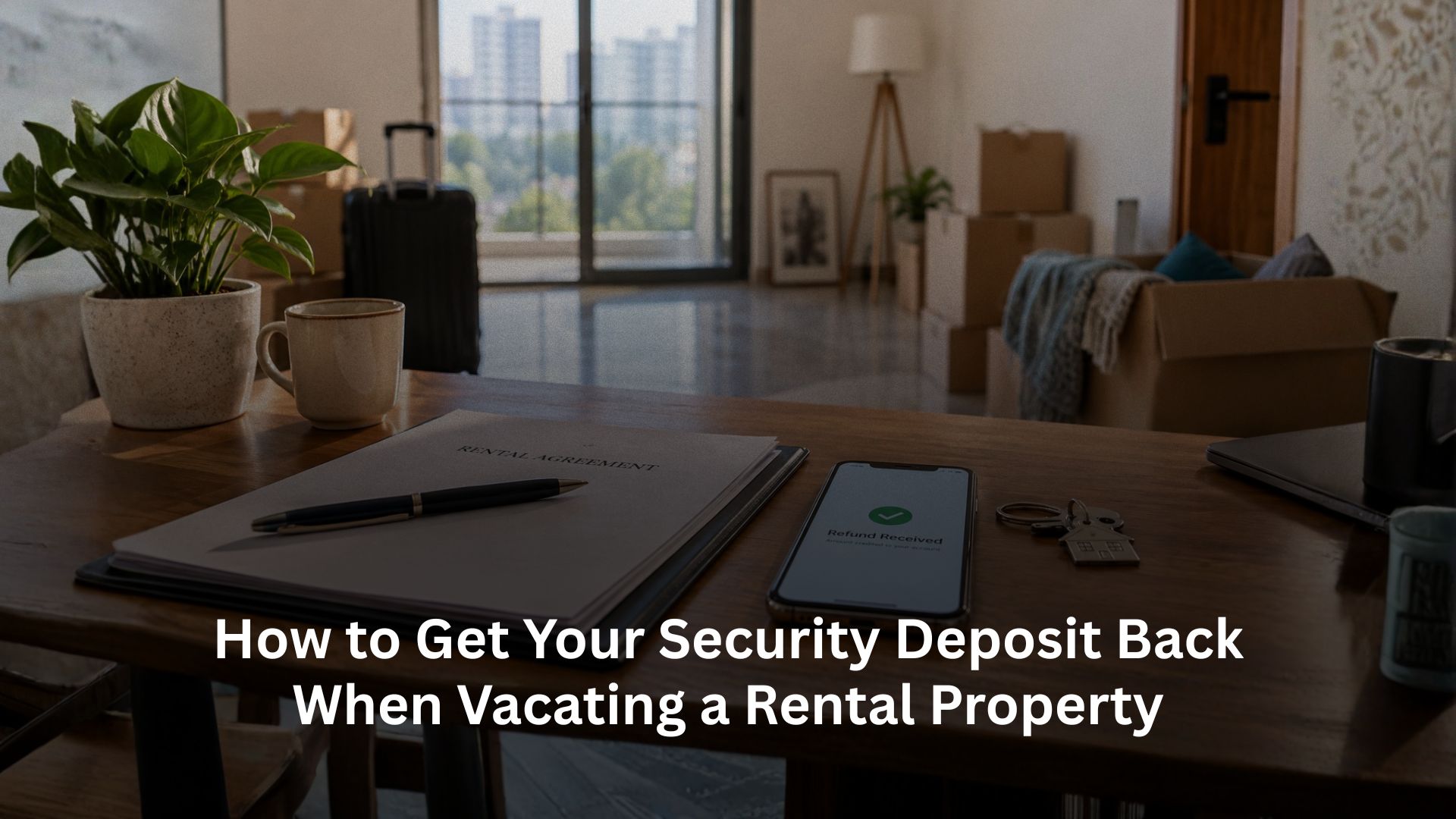
How to Get Your Security Deposit Back When Vacating a Rental Property

Written by
Ishika Pannu
Read Time
15 min read
Posted on
September 5, 2026
Overview
Overview
How to Get Your Security Deposit Back When Vacating a Rental Property
Moving out of a rental property should be simple. Rent has been paid, the tenancy is ending, and the tenant is ready to leave. Yet one question can make the final stage stressful: When will I get my security deposit back?
A security deposit can be a significant amount of money. For students, young professionals, and families, getting it back can help fund the next move.
Problems arise when landlords delay refunds or make unclear deductions. Some landlords may also stop responding after the property is handed over.
Security-deposit disputes are rarely about the deposit alone. They often result from unclear terms or poor documentation. Unsettled dues and informal handovers can also cause problems.
That is why getting your deposit back involves more than simply asking for it. You should follow a clear process throughout the tenancy. This helps create a proper record from move-in to final settlement.
If you want to understand how deposits work in India, RentOk’s guide on Security Deposits in India: Everything You Need to Know offers a useful overview. It explains why deposits are collected and how they can vary. It also covers factors that may affect the amount you receive back.
What the Law Says About Security Deposit Refunds in India
Tenants should know that India has no single security-deposit rule for every rental property. The legal position can vary by state or Union Territory, property type, tenancy, and rental agreement.
The Model Tenancy Act, 2021 is often treated as a nationwide tenancy law. It is not. It is a model framework that states and Union Territories may adopt.
Under the Model Tenancy Act framework, residential properties have a proposed deposit limit of two months’ rent. For non-residential premises, the limit is six months’ rent. The framework also provides for deposit refunds after vacant possession is returned, subject to valid deductions.
These rules may not apply to every rental arrangement. Your rental agreement is therefore important.
Before disputing a deduction, check your agreement for:
- Deposit details: Confirm the amount paid and keep proof of payment.
- Allowed deductions: Check rules for unpaid rent, utilities, damage, cleaning, or other agreed charges.
- Move-out terms: Review notice, inspection, and key-handover requirements.
- Refund terms: Check when the remaining deposit should be returned.
A landlord cannot simply keep the deposit without considering the agreed terms. However, not every deduction is automatically unlawful.
For a state-wise overview, RentOk’s guide, The Security Deposit Amount: What Is Legal in Your State?, explains how legal requirements and market practices can differ.

Before You Vacate, Get Your Records in Order
The strongest security-deposit claim is usually built before the tenant moves out.
This is where many renters make a mistake. They start thinking about documentation only after the landlord has already made a deduction. By then, it can be difficult to establish what the property looked like when the tenancy began, which payments were made, or what was agreed during the move-out process.
Ideally, the final stage of a tenancy should be treated as a formal handover rather than an informal exchange of keys.
Before vacating, go through your records and make sure you have:
- Proof of the security deposit payment, such as a bank transaction, receipt, payment confirmation, or other written acknowledgment showing the amount paid.
- Rent and utility payment records, particularly for the final months of the tenancy, so there is no confusion about whether any amount remains outstanding.
- A copy of the rental agreement, including clauses covering notice periods, lock-in periods, maintenance responsibilities, damages, and deposit deductions.
- Move-in photographs or videos, especially if the property was furnished or contained appliances, fixtures, or other items that could later become part of a damage dispute.
- Written communication about your move-out, including the date on which you gave notice and any confirmation received from the landlord.
This may sound like excessive preparation for something as routine as moving out. It is not.
Documentation becomes valuable precisely when the two parties remember the same event differently.
RentOk’s guide on How to Manage Move-In and Move-Out Smoothly also highlights why documenting the tenant journey from onboarding through exit can prevent problems from appearing later.
Give the Correct Notice Before Leaving
One of the easiest ways to create a dispute is to treat the notice period casually.
If your agreement requires 30 days’ notice, for example, informing the landlord a few days before leaving may create an argument over rent or other charges. The same becomes more complicated where the agreement contains a lock-in period or specific early-termination conditions.
Your move-out communication should therefore be clear and written.
Mention the date on which you intend to vacate and ask the landlord to acknowledge it. If there are specific handover requirements, confirm those as well.
This creates an important timeline:
Notice given → move-out date confirmed → property inspected → keys handed over → dues settled → deposit calculated → remaining amount refunded.
That timeline is much easier to defend than a series of informal phone calls.
If your tenancy involves a lock-in period, it is worth understanding those terms before assuming that giving notice automatically ends every financial obligation. RentOk’s article on Managing Tenant Lock-in Periods Without Conflict discusses why early exits, notice periods, and deposit adjustments can become contentious when the original terms were not clearly understood.
Document the Property Before Handing It Back
A tenant may believe the property is in good condition. The landlord may look at the same room and identify several things that need repair.
That is exactly why a final inspection should not rely entirely on memory.
Before handing over the property, photograph or record the major areas of the premises. If the property was furnished, include furniture and appliances as well. Where relevant, record meter readings and make sure keys, access cards, remotes, and other property items are accounted for.
The objective is not to photograph every corner obsessively. It is to create a reasonable record of the property’s condition at the end of the tenancy.
This becomes particularly useful when a deduction is later described as a repair cost. If you already have photographs showing the condition at handover, the conversation can focus on evidence rather than competing recollections.
A proper move-out inspection should ideally cover:
- The room or apartment itself, including walls, flooring, doors, windows, fittings, and other visible fixtures.
- Furniture and appliances, where the property was furnished and these items formed part of the tenancy.
- Bathrooms and kitchen areas, especially where cleaning, fixtures, plumbing, or appliance-related deductions may later be claimed.
- Utilities and access items, including final meter readings, keys, remotes, access cards, or other items provided at move-in.
The same principle applies to the beginning of the tenancy. A move-in record gives both sides a baseline against which the final condition can be compared.
What Deductions Can Be Made From a Security Deposit?
This is where many security-deposit disputes become complicated.
A landlord may have a valid reason to deduct money from a deposit. However, the tenant should understand why the deduction was made and how the amount was calculated.
Common deductions may include unpaid rent or utility bills. They may also cover damage beyond normal use. Other liabilities may apply if they are covered by the rental agreement and applicable law.
The difference between ordinary wear and actual damage is especially important.
A rental property naturally shows signs of use over time. Paint may fade or become less fresh. Fixtures may show normal wear. Minor marks can also appear during a regular tenancy.
This is different from significant damage caused by negligence or misuse.
If a landlord makes a deduction, they should ideally explain the charge. Simply saying that an amount has been “adjusted” may not give the tenant enough information.
A clear breakdown can help both parties understand the final settlement. It can also reduce the risk of disputes.
For tenants, ask for a settlement that clearly shows:
- The original deposit amount, so there is no disagreement about the starting figure.
- Any outstanding rent or utility amount, with the relevant period or bill identified rather than grouped into a vague deduction.
- Repair or damage charges, including what was damaged and why the tenant is responsible for the cost.
- The final refundable balance, showing exactly how the original deposit was reduced and what remains payable to the tenant.
Clear calculations can prevent a small deduction from turning into a much larger argument.

What If Your Landlord Is Not Returning the Deposit?
If the agreed refund has not arrived, the first step should usually be a clear written request, not an immediate threat of legal action.
Contact the landlord and refer to the tenancy, the date you vacated, the date the property was handed over, and the security deposit amount. If there are deductions, ask for the details and supporting explanation.
Keep the tone professional.
You want to establish a written record showing that you have asked for the settlement and given the landlord an opportunity to respond.
If the landlord is responsive but says the refund is being processed, ask for a specific timeline. If there is a genuine pending utility bill or another amount that cannot yet be finalised, ask how that amount will be calculated and when the remaining balance will be released.
The problem becomes more serious when communication stops altogether or the landlord refuses to explain why the money is being withheld.
At that point, your documentation becomes especially important.
A useful record should bring together the agreement, deposit payment, rent payments, move-out notice, property-condition evidence, handover confirmation, and all communication regarding the refund.
RentOk’s recent guide on How to Handle a Rental Dispute Without Going to Court is relevant here because many rental disputes can become easier to handle when communication and documentation are organised before the disagreement escalates.
When Should You Send a Legal Notice?
A legal notice is generally a more formal step than an ordinary refund request. It can communicate that you are formally seeking an amount you believe is due and give the other party an opportunity to resolve the matter.
Before reaching this stage, make sure you have already established the basic facts.
Your records should ideally show:
How much deposit was paid, when the tenancy ended, when possession was handed over, what dues were cleared, what deductions were communicated, and what amount remains disputed.
A legal notice can then be based on those facts rather than an incomplete account of the tenancy.
The notice may set out the relevant agreement, the deposit amount, the circumstances of the move-out, the amount being claimed, and the action requested from the landlord.
Because tenancy laws and available remedies differ by jurisdiction, the appropriate legal route can depend on where the property is located and the nature of the tenancy. If the amount is significant or the dispute is becoming contentious, obtaining advice from a qualified legal professional is sensible.
The goal of a legal notice is not simply to make the dispute sound more serious. Its value lies in creating a formal record of your position and giving the other party a clear opportunity to resolve the matter.
What If the Landlord Still Refuses to Refund the Deposit?
If written communication and a formal demand do not resolve the matter, the next step may involve pursuing the appropriate legal remedy available in the relevant jurisdiction.
This is where tenants should avoid relying on generic advice found online. A process that applies to one state, tenancy category, or type of rental property may not necessarily apply to another.
Instead, focus on building a complete evidence trail.
The stronger your records, the easier it becomes to explain the dispute clearly to a legal professional or the appropriate authority or court.
Your documentation may include:
- The signed rental agreement and any written amendments, because these establish the contractual terms governing the tenancy.
- Security-deposit and rent-payment records, which establish what was actually paid rather than relying on memory.
- Move-in and move-out photographs, particularly where the dispute concerns alleged property damage.
- Notice and handover records, including the date you informed the landlord and the date possession was returned.
- Emails, messages, receipts, and settlement statements, especially communication relating to deductions or promised refund dates.
The objective is simple: make the history of the tenancy easy to understand.
A well-documented dispute is considerably easier to assess than one based on “the landlord said this” and “the tenant said that.”
One More Document That Can Make Move-Out Easier
For tenants, one of the most useful pieces of documentation at the end of a tenancy is confirmation that financial obligations have been settled.
This can take the form of a no-dues confirmation or another written settlement record, depending on the rental arrangement.
For PGs and co-living properties in particular, the final settlement may involve more than monthly rent. Electricity, food, maintenance, damages, notice-period obligations, and other charges may all need to be checked before the deposit is refunded.
RentOk’s guide on How to Write a No-Dues Certificate for PG Tenants explains why a clear final record can reduce confusion after a tenant has already moved out.
For a tenant, receiving written confirmation of the final settlement provides clarity. For a landlord or PG operator, maintaining the same record helps demonstrate how the deposit was calculated.

How RentOk Helps Make Security Deposit Management More Transparent
For property managers, the challenge is not simply returning a deposit. It is maintaining an accurate record of the entire tenant lifecycle so that the final settlement does not depend on scattered spreadsheets, messages, receipts, or memory.
RentOk brings important tenant and property-management information into a more structured system, helping operators maintain visibility over tenant records, payments, occupancy, move-in and move-out processes, and other day-to-day workflows.
This becomes particularly valuable when a property has dozens or hundreds of tenants. Instead of trying to reconstruct a tenant’s history at the time of move-out, operators can maintain records throughout the stay.
That can make it easier to track:
- The security deposit received from the tenant, along with the relevant payment record.
- The tenant’s payment history and outstanding dues, helping operators establish the financial position before final settlement.
- Move-in and move-out information, including the condition of the room and relevant handover details.
- Final deductions and settlement records, creating greater transparency around how the refundable balance was calculated.
RentOk’s existing approach to deposit management focuses on exactly this kind of lifecycle visibility, including digital move-in and move-out checklists, deposit tracking, and settlement records.
For operators, the benefit goes beyond avoiding one deposit dispute. A structured process creates a more consistent tenant experience and gives the property team a reliable record whenever a question arises later.
Conclusion
Getting a security deposit back is not something a tenant should have to fight for by default. In a well-managed tenancy, the process should be based on clear terms, documented payments, a proper property handover, and a transparent final settlement.
The most important step is to avoid waiting until the dispute begins. Read the agreement before moving out, provide the required notice, settle your dues, document the condition of the property, and keep important communication in writing. If a deduction is made, ask what it relates to and how it was calculated. If the deposit remains unpaid, build your case through documentation before deciding whether formal legal action is necessary.
At the same time, landlords and property managers have an equally important role to play. Transparent deposit policies and organised move-out processes do more than protect property owners, they reduce disputes and create greater trust with tenants.
When both sides have a clear record of what was agreed, what was paid, what happened during the tenancy, and how the final amount was calculated, the security-deposit conversation becomes far less complicated.
Frequently Asked Questions
Find answers to common questions about this topic
About the Author
Ishika Pannu
Ishika Pannu brings you the latest insights and easy-to-apply strategies in property management—helping you simplify renting and grow with RentOk.
You may also like these
Related Articles

1 min read
The Satya Niketan PG Collapse: What It Means for Safety in Delhi PG’s
Written by
Posted on
Ishika Pannu
Sep 7, 2026
1 min read
How to File a Rental Dispute Complaint in India (Step-by-Step Guide)
Written by
Posted on
Ishika Pannu
Sep 6, 2026

1 min read
What to Do If Your Landlord Refuses to Return Your Security Deposit
Written by
Posted on
Ishika Pannu
Sep 5, 2026

1 min read
Why Landlords Cannot Legally Refuse Unmarried Tenants in India
Written by
Posted on
Ishika Pannu
Sep 5, 2026

1 min read
What Is Tenant Police Verification and Why Is It Mandatory in India?
Written by
Posted on
Ishika Pannu
Sep 4, 2026
1 min read
How to Read a Rent Agreement Before Signing: What to Watch Out For
Written by
Posted on
Ishika Pannu
Sep 4, 2026

1 min read
What Are Your Rights as a Tenant Under the Model Tenancy Act?
Written by
Posted on
Ishika Pannu
Sep 3, 2026

1 min read
How to Get FSSAI Licence for Your Hostel Mess or Canteen
Written by
Posted on
Ishika Pannu
Sep 3, 2026
1 min read
How to Use Digital Signatures on Rent Agreements Legally in India
Written by
Posted on
Ishika Pannu
Sep 1, 2026

1 min read
How to Get Society Permission Before Renting Out Your Flat
Written by
Posted on
Ishika Pannu
Aug 31, 2026
Stay ahead in property management with expert insights
Join thousands of property managers receiving exclusive tips delivered straight to your inbox.
Browse posts by category
Case Study
Cost of Living
Growth
Legal
Market Trends
News
Pg owner app
Property Management
Property Tax
Tech
RentOk
The easiest way to rent and manage your PGs and hostels.
Get the app


Contact us
hello@eazyapp.tech
HQ Office
COGROW, BASEMENT F-12/8A
BESIDE HOUSE OF STYLE SALON, SECTOR 28, DLF PHASE 1
GURUGRAM, HARYANA - 122002
South India Office
LUMIODESK COWORKING, 2ND FLOOR, 40, 14TH MAIN RD
BESIDE MC DONALD, 7TH SECTOR, HSR LAYOUT
BENGALURU, KARNATAKA - 560102
©️ 2026 EazyApp Tech Pvt Ltd. All rights reserved


