
Legal
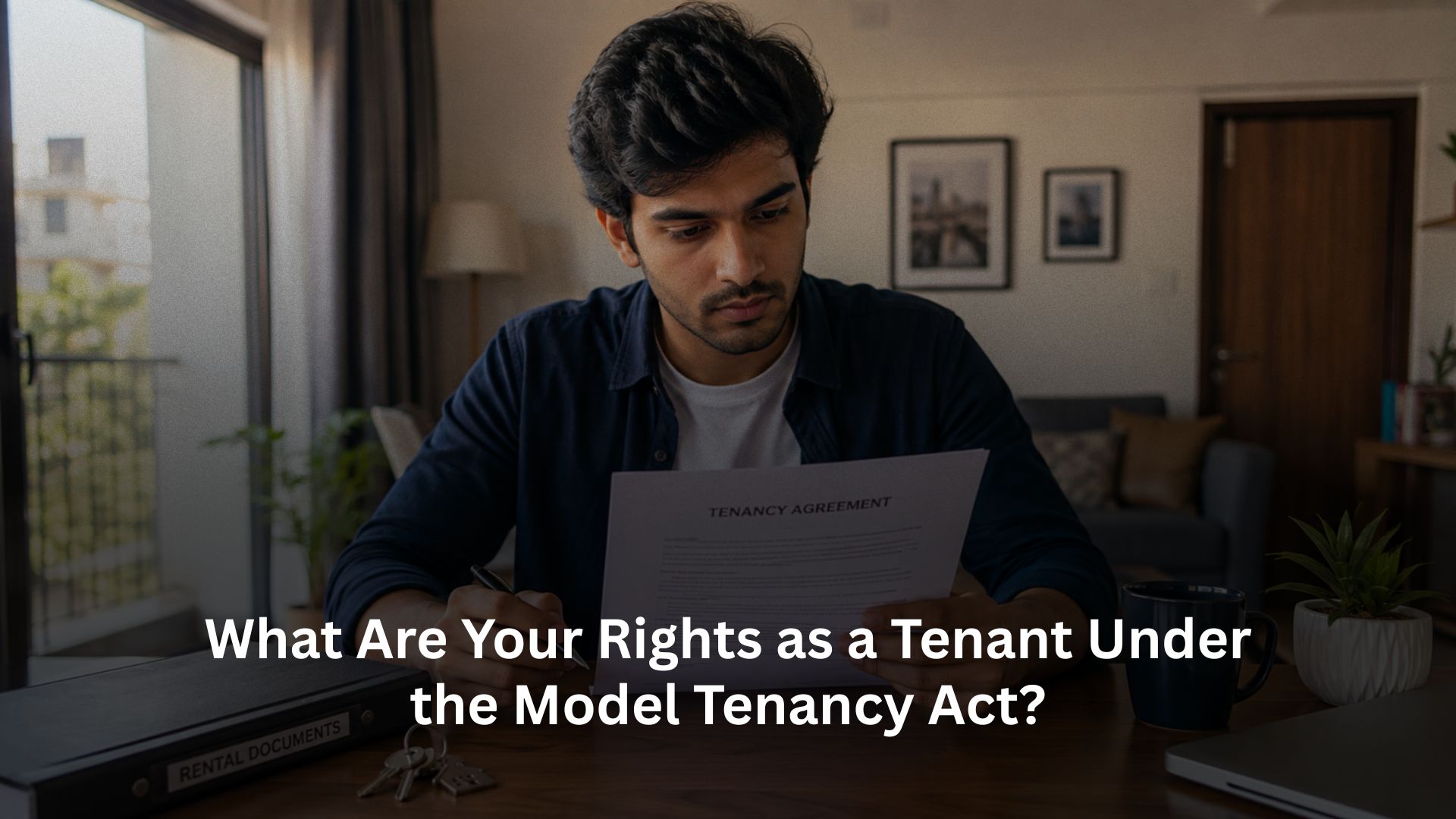
What Are Your Rights as a Tenant Under the Model Tenancy Act?

Written by
Ishika Pannu
Read Time
18 min read
Posted on
September 3, 2026
Overview
Overview
What Are Your Rights as a Tenant Under the Model Tenancy Act?
Renting a home may seem like a simple arrangement. You pay the rent, follow the agreed terms, and the landlord provides a place to live. However, the relationship can become more complex when issues arise. These may involve security deposits, maintenance, essential services, rent increases, or eviction.
This is where understanding your rights as a tenant becomes important.
The Model Tenancy Act, 2021 (MTA) was introduced to bring more structure to India’s rental housing system. It provides a framework for key parts of the landlord-tenant relationship. These include written tenancy agreements, security deposits, essential services, eviction, and dispute resolution. The aim is to create a rental system where both parties understand their duties and have a clear process for handling disagreements.
However, tenants should understand one important point before looking at the MTA’s provisions. The Model Tenancy Act is a model framework. It does not automatically apply across India. Tenancy is mainly governed by state-level laws. States and Union Territories may adopt the MTA, modify its provisions, or continue using their existing tenancy laws.
This distinction is important for tenants. Understanding what the MTA proposes can provide useful guidance. However, tenants must also know which law applies to their rental property. The applicable state or local tenancy rules may differ from the MTA framework. Checking the relevant law can help tenants better understand their rights, responsibilities, and available remedies.
What Does the Model Tenancy Act Say About Tenants?
The Model Tenancy Act (MTA) aims to make rental arrangements more structured. It gives tenants and landlords clearer terms for their rental relationship.
For tenants, this offers an important benefit: clarity before a dispute arises.
A tenancy agreement should clearly state the rent and rental period. It should also cover the security deposit and maintenance duties. Termination rules should be clear as well.
Written terms can prevent confusion when problems arise. They also give both parties a clear record of their responsibilities.
For example, a tenant may expect the landlord to handle minor repairs. The landlord may have a different view. If the agreement is unclear, a small repair issue can become a larger dispute.
The same applies to rent revisions, utility payments, notice periods, and early termination.
Before signing, tenants should look beyond the monthly rent. The full financial and operational arrangement matters.
Pay close attention to these clauses:
- Tenancy duration and renewal: Check the rental period and renewal process. Confirm whether a new agreement is required.
- Notice periods: Check how much notice each party must provide. Look for any special rules during a lock-in period.
- Maintenance and repairs: Understand who handles repairs, appliances, structural issues, and common facilities.
- Termination conditions: Check when the tenancy can end. Make sure the required process is clearly stated.
Tenants should read the agreement carefully before signing. They should also ask questions about unclear terms.
A clear agreement can make disagreements easier to manage. It gives both parties a reliable reference. This can improve communication and reduce unnecessary conflict.
If an eviction-related disagreement has already started, knowing the next steps is important. RentOk’s How to Handle a Rental Dispute Without Going to Court explains practical ways to address rental disputes. Early communication and proper documentation can help prevent disputes from escalating.

Your Right to Essential Services
A rental property cannot function as a home if basic services are suddenly withdrawn.
The Model Tenancy Act specifically addresses the provision of essential supplies and services and places restrictions on landlords cutting off or withholding them as a way of putting pressure on tenants. Under the model framework, disputes over rent or other tenancy matters are not intended to become a reason for arbitrarily disrupting essential services.
This is an important protection because service-related disputes can escalate very quickly.
Consider a situation where a tenant and landlord disagree over rent or another payment. If the disagreement is handled through communication and the appropriate dispute mechanism, there is an opportunity for both parties to resolve the matter. But if basic services are interrupted instead, the dispute immediately affects the tenant’s everyday ability to occupy the property.
For tenants, however, this protection should not be misunderstood as permission to ignore their own obligations. A tenant is still expected to pay rent and comply with the terms of the tenancy agreement. The purpose of the provision is to prevent essential services from becoming an informal tool for resolving disputes.
In practical terms, tenants should maintain records whenever an essential-service issue arises. Written complaints, photographs, payment records, and communication with the landlord or property manager can become important if the issue remains unresolved.
The broader principle is simple: a tenancy dispute should be addressed through the terms of the agreement and the applicable legal process, not by making the property unliveable.
Can a Landlord Evict You Whenever They Want?
Eviction is one of the areas where tenants are often most uncertain about their rights.
A landlord owns the property, but ownership does not mean that possession can always be recovered instantly or without following the applicable process. The Model Tenancy Act establishes specified grounds and procedures for eviction rather than treating eviction as an informal decision.
The model framework identifies circumstances such as non-payment of rent, certain forms of misuse, unauthorised occupation, and other specified situations as grounds that can lead to eviction proceedings.
This creates an important distinction between a landlord having a legitimate reason to seek possession and a landlord simply demanding that a tenant leave without following the relevant process.
For tenants, this is why documentation matters so much.
If a disagreement develops, the tenant should be able to establish what was agreed and what actually happened during the tenancy. Keeping the following records can make a significant difference:
- Rent payment records help establish whether rent was paid on time and can be particularly useful when a dispute concerns alleged arrears.
- The signed tenancy agreement provides the original terms of occupation, including notice requirements, rent, deposit conditions, and other obligations.
- Written communication creates a timeline of notices, complaints, requests, and responses instead of leaving important events dependent on memory.
- Move-in and property-condition records can help distinguish pre-existing issues from damage or maintenance problems that arise during the tenancy.
This is not about preparing for a legal battle every time you rent a room. It is about creating a reliable record so that, if something does go wrong, both sides have something concrete to refer to.
What Protection Do Tenants Have Over Security Deposits?
The security deposit is often one of the biggest upfront costs of renting, particularly for tenants moving into a new city for college or work. It is also one of the most common sources of disagreement when the tenancy ends.
Under the Model Tenancy Act framework, the proposed limit for a residential property is two months’ rent as a security deposit. For non-residential premises, the model framework provides for a limit of six months’ rent. The framework also provides for the deposit to be refunded when vacant possession is taken back, subject to applicable deductions.
But once again, tenants should not interpret this as a universal nationwide rule.
The MTA is a model framework, and the actual rules applicable to a property depend on the relevant State or Union Territory and the legislation it has adopted. RentOk’s recent guide to security deposit limits across India makes this distinction particularly important: deposit practices can differ considerably depending on the jurisdiction and type of rental arrangement.
For a tenant, the practical lesson is to understand the deposit before paying it, rather than waiting until move-out to ask questions.
The agreement should make it reasonably clear what happens to the deposit and under what circumstances deductions may be made. Tenants should also document the condition of the property at the beginning of the tenancy, especially where the property is furnished.
A few photographs taken during move-in can become surprisingly useful months later if there is disagreement about whether a particular issue existed before the tenant arrived.
This becomes even more important when the deposit is being settled at the end of a tenancy. RentOk’s Handling Security Deposits: Legal Norms and Best Practices explores why documentation, deductions, and refund processes need to be handled carefully to avoid unnecessary disputes.
How Does the Dispute Resolution Mechanism Work?
A rental disagreement does not always need to become a prolonged court battle. One of the important changes proposed under the Model Tenancy Act is the creation of a dedicated framework for handling tenancy disputes through the Rent Authority, Rent Court, and Rent Tribunal.
The idea is to provide landlords and tenants with a specialised mechanism for resolving disputes instead of making every rental disagreement part of the conventional judicial process. The framework also aims to make the process more accessible and time-bound.
For tenants, this becomes particularly relevant when an issue cannot be resolved through normal communication. A disagreement could involve unpaid rent, security-deposit deductions, possession of the property, maintenance responsibilities, or another condition connected with the tenancy.
The existence of a formal dispute-resolution mechanism is important because it provides both parties with a clear and structured way to approach disagreements. However, formal dispute mechanisms are only one part of effectively managing a tenancy dispute. In many cases, proper documentation, clear communication, and early resolution efforts can prevent a disagreement from escalating in the first place. RentOk’s How to Handle a Rental Dispute Without Going to Court offers a practical look at this approach. Rather than relying on pressure, repeated arguments, or informal threats, tenants and landlords can follow a defined process to communicate their concerns, document the issue, and work toward a resolution before formal proceedings become necessary.
However, tenants should again distinguish between what the Model Tenancy Act proposes and what is legally available in their own state. The MTA does not automatically create Rent Courts or Rent Authorities everywhere in India. Whether these mechanisms apply depends on the adoption and implementation of the framework in the relevant jurisdiction.
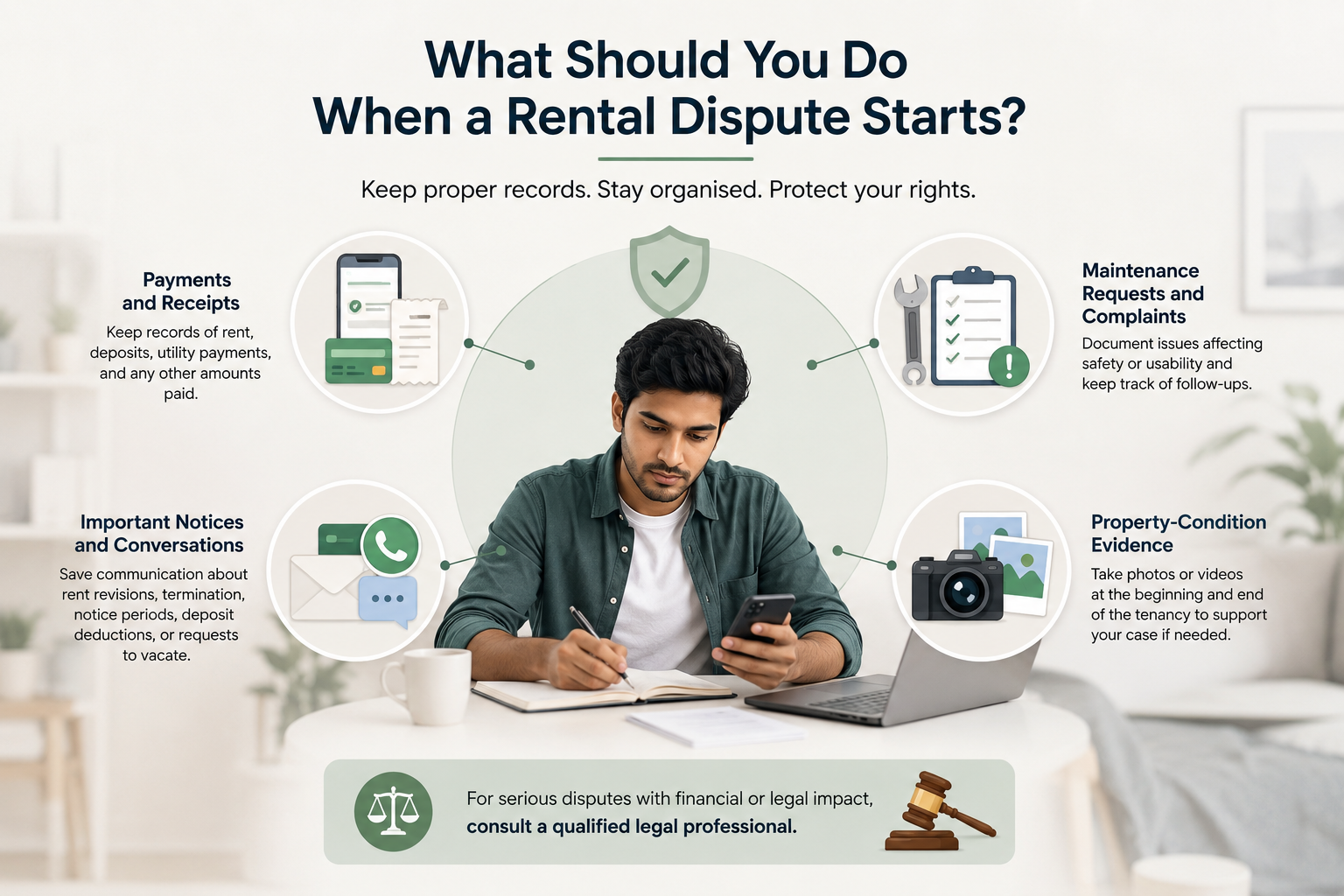
What Should You Do When a Rental Dispute Starts?
Knowing that you have rights is useful, but protecting those rights often begins with something much simpler: keeping proper records.
Rental disputes frequently become difficult because important conversations happen informally. A landlord may communicate an instruction over a phone call, a tenant may make a maintenance request through WhatsApp, and payment confirmations may remain scattered across bank statements and messages. Months later, neither party has a complete picture of what actually happened.
A more organised approach can prevent this.
If an issue arises, tenants should try to maintain a clear record of:
- Payments and receipts, including rent transactions, deposit payments, utility payments, and any other amounts paid under the tenancy arrangement.
- Maintenance requests and complaints, particularly where an issue affects the usability or safety of the property and repeated follow-ups have been necessary.
- Important notices and conversations, especially communication concerning rent revisions, termination, notice periods, deposit deductions, or requests to vacate.
- Property-condition evidence, including photographs or videos from the beginning and end of the tenancy where they are relevant to a dispute.
This does not mean every interaction with a landlord needs to become formal or confrontational. In fact, good documentation can make ordinary communication easier because both parties have the same information available.
If a dispute is serious or involves substantial financial or legal consequences, tenants should also consider obtaining advice from a qualified legal professional who can assess the specific law applicable to their property.
Why the Written Tenancy Agreement Matters So Much
A tenancy agreement is often treated as paperwork to complete before moving in. In reality, it is one of the most important documents in a rental relationship.
The agreement sets the terms for occupying the property. It also defines what both the tenant and landlord are expected to do. A well-drafted agreement can prevent confusion when problems arise.
For example, a tenant may believe the landlord is responsible for minor repairs. The landlord may have a different understanding. If the agreement is unclear, even a small maintenance issue can lead to a dispute.
The same applies to notice periods, rent revisions, utility payments, and early termination.
Before signing, tenants should look beyond the monthly rent. The full financial and operational arrangement matters.
Pay attention to clauses covering:
- Tenancy duration and renewal: Check the rental period and renewal process. Find out whether a fresh agreement is needed.
- Notice periods: Confirm how much notice each party must provide. Check if different rules apply during a lock-in period.
- Maintenance and repairs: Understand who handles routine repairs, structural issues, appliances, and common facilities.
- Termination conditions: Check when the tenancy can end. Make sure the required procedure is clearly explained.
Tenants should understand these terms before moving in. They should also ask questions about any unclear clauses.
A tenant who knows the agreement is better prepared when disagreements arise. The written terms give both parties a clear reference. This can make communication easier and help prevent unnecessary conflict.
If an eviction-related disagreement has already started, knowing the next steps is also important. RentOk’s How to Handle a Rental Dispute Without Going to Court explains practical ways to address rental disagreements before they become formal proceedings.
Does the Model Tenancy Act Apply Everywhere in India?
This is where tenants need to be particularly careful.
The Model Tenancy Act is not a single nationwide tenancy law that automatically governs every rental property in India. It was introduced as a model framework and circulated to States and Union Territories for adoption. Individual jurisdictions can adopt the framework through their own legislation or modify their existing tenancy laws.
That means a tenant should not assume that a provision they read about online automatically applies to their rental property.
The applicable rules can depend on several factors, including the location and nature of the property, the tenancy arrangement, and the legislation that has been adopted in that jurisdiction.
This distinction is especially important when researching topics such as security deposits. A tenant may read that the MTA proposes a two-month limit for residential security deposits and assume that every landlord in India is legally restricted to that amount. That conclusion can be incorrect if the relevant state has not adopted the provision in that form.
The same caution applies to eviction procedures and dispute-resolution mechanisms.
The MTA is useful for understanding the direction of tenancy reform in India, but your actual legal rights must be assessed under the law applicable to your property.
A Tenant’s Rights Come With Responsibilities Too
Tenant protection does not mean that the landlord has no rights.
A healthy rental system depends on both parties understanding their responsibilities. Just as a landlord is expected to follow the applicable legal and contractual process, a tenant is expected to honour the terms they agreed to.
That includes paying rent on time, using the premises appropriately, following reasonable conditions of occupation, and providing the required notice when ending the tenancy.
This balance is important because tenancy law is not designed simply to favour one side.
For example, protection against arbitrary eviction does not mean a tenant can stop paying rent indefinitely. Similarly, protections around security deposits do not mean that legitimate deductions for obligations under the tenancy can never be made.
The strongest rental relationships are usually built around clear expectations rather than constant enforcement.
When the agreement is properly documented and both sides understand their responsibilities, many disputes can be resolved through straightforward communication before they require formal intervention.
What Should You Check Before Signing a Rental Agreement?
Understanding tenant rights should ideally begin before you become a tenant.
A quick review of the property and agreement at the beginning can prevent significant confusion later. This is particularly important when moving into a PG or co-living property, where the rental arrangement may also involve additional services and charges.
Before committing to a property, make sure you understand:
- The complete monthly cost, including rent, maintenance, electricity, food, internet, housekeeping, or other charges that may apply separately from the advertised rent.
- The deposit and refund terms, including how much is payable, how deductions work, and what happens during the final settlement.
- The exit process, including the notice period, lock-in conditions, and any specific requirements before vacating.
- The condition of the room or property, especially furniture, appliances, fixtures, walls, and other items that may later be considered when settling the deposit.
- The agreement itself, including who is responsible for maintenance, how rent changes are handled, and what happens if either party wants to terminate the arrangement.
This kind of due diligence is not just about protecting yourself legally. It also helps you determine whether the property is actually suitable before you commit financially.
For tenants comparing different rental options, understanding the difference between advertised amenities and the actual rental arrangement can be equally important. RentOk’s platform can help make the property-search process more structured by bringing rental options into one place.
What Does This Mean for Tenants in Practice?
The biggest takeaway from the Model Tenancy Act is not that tenants suddenly have unlimited protection. Rather, it represents a move towards a more formal and transparent rental ecosystem.
Tenants are expected to have clearly defined rights, but those rights operate alongside contractual obligations. Landlords retain legitimate rights over their properties, but tenancy decisions are expected to follow defined rules and procedures.
For someone renting today, that means being proactive is often more useful than simply knowing a list of legal provisions.
Read the agreement before signing it. Keep records of payments. Document the condition of the property. Ask questions about deposits and notice periods before moving in. And if a serious dispute develops, identify the law and dispute-resolution mechanism that actually applies to your tenancy.
The more clearly the rental relationship is documented from the beginning, the less room there is for misunderstandings later.

How RentOk Helps Tenants and Property Managers Manage Rentals Better
A well-structured rental experience depends on more than knowing the law. It also depends on having accurate information and organised processes throughout the tenancy.
RentOk helps bring key rental operations into a centralised platform, allowing property managers and landlords to manage areas such as tenant information, rent and payment tracking, occupancy, agreements, deposits, complaints, and day-to-day communication in a more organised manner. This gives property operators better visibility while creating a more structured experience for tenants.
For tenants, organised rental records can make important information easier to access and reduce the confusion that often comes from scattered conversations, payment records, and property-related updates. For landlords and PG operators, the same structure can make it easier to maintain consistent records and manage tenant relationships as the property grows.
RentOk does not replace legal advice or determine which tenancy law applies in a particular state. Its role is to simplify the operational side of rental management so that landlords, property managers, and tenants can work with clearer information and more organised processes.
Conclusion
The Model Tenancy Act represents an important step towards making India’s rental market more structured. Its framework addresses several issues that directly affect tenants, from written tenancy agreements and security deposits to essential services, eviction procedures, and dispute resolution.
But understanding the MTA also means understanding its limits. It is a model framework, not an automatically applicable law across every state and Union Territory. The specific rights available to you depend on the legislation applicable to the property you are renting.
For tenants, the best approach is therefore a combination of awareness and preparation. Know your agreement, understand your financial obligations, maintain records, document important communication, and make sure you know which legal framework governs your tenancy.
A transparent rental relationship benefits both sides because clarity reduces the uncertainty that usually leads to disputes.
If you’re searching for a rental property where the process is more structured and transparent, Explore Verified Rental Properties on RentOk and find a rental option that fits your needs.
Frequently Asked Questions
Find answers to common questions about this topic
About the Author
Ishika Pannu
Ishika Pannu brings you the latest insights and easy-to-apply strategies in property management—helping you simplify renting and grow with RentOk.
You may also like these
Related Articles

1 min read
The Satya Niketan PG Collapse: What It Means for Safety in Delhi PG’s
Written by
Posted on
Ishika Pannu
Sep 7, 2026
1 min read
How to File a Rental Dispute Complaint in India (Step-by-Step Guide)
Written by
Posted on
Ishika Pannu
Sep 6, 2026

1 min read
What to Do If Your Landlord Refuses to Return Your Security Deposit
Written by
Posted on
Ishika Pannu
Sep 5, 2026
1 min read
Why Landlords Cannot Legally Refuse Unmarried Tenants in India
Written by
Posted on
Ishika Pannu
Sep 5, 2026
1 min read
How to Get Your Security Deposit Back When Vacating a Rental Property
Written by
Posted on
Ishika Pannu
Sep 5, 2026
1 min read
What Is Tenant Police Verification and Why Is It Mandatory in India?
Written by
Posted on
Ishika Pannu
Sep 4, 2026
1 min read
How to Read a Rent Agreement Before Signing: What to Watch Out For
Written by
Posted on
Ishika Pannu
Sep 4, 2026

1 min read
How to Get FSSAI Licence for Your Hostel Mess or Canteen
Written by
Posted on
Ishika Pannu
Sep 3, 2026
1 min read
How to Use Digital Signatures on Rent Agreements Legally in India
Written by
Posted on
Ishika Pannu
Sep 1, 2026
1 min read
How to Get Society Permission Before Renting Out Your Flat
Written by
Posted on
Ishika Pannu
Aug 31, 2026
Stay ahead in property management with expert insights
Join thousands of property managers receiving exclusive tips delivered straight to your inbox.
Browse posts by category
Case Study
Cost of Living
Growth
Legal
Market Trends
News
Pg owner app
Property Management
Property Tax
Tech
RentOk
The easiest way to rent and manage your PGs and hostels.
Get the app


Contact us
hello@eazyapp.tech
HQ Office
COGROW, BASEMENT F-12/8A
BESIDE HOUSE OF STYLE SALON, SECTOR 28, DLF PHASE 1
GURUGRAM, HARYANA - 122002
South India Office
LUMIODESK COWORKING, 2ND FLOOR, 40, 14TH MAIN RD
BESIDE MC DONALD, 7TH SECTOR, HSR LAYOUT
BENGALURU, KARNATAKA - 560102
©️ 2026 EazyApp Tech Pvt Ltd. All rights reserved


