
Legal
The Satya Niketan PG Collapse: What It Means for Safety in Delhi PG’s

Written by
Ishika Pannu
Read Time
15 min read
Posted on
September 7, 2026
Overview
Overview
The Satya Niketan PG Collapse: What It Means for Safety in Delhi PGs
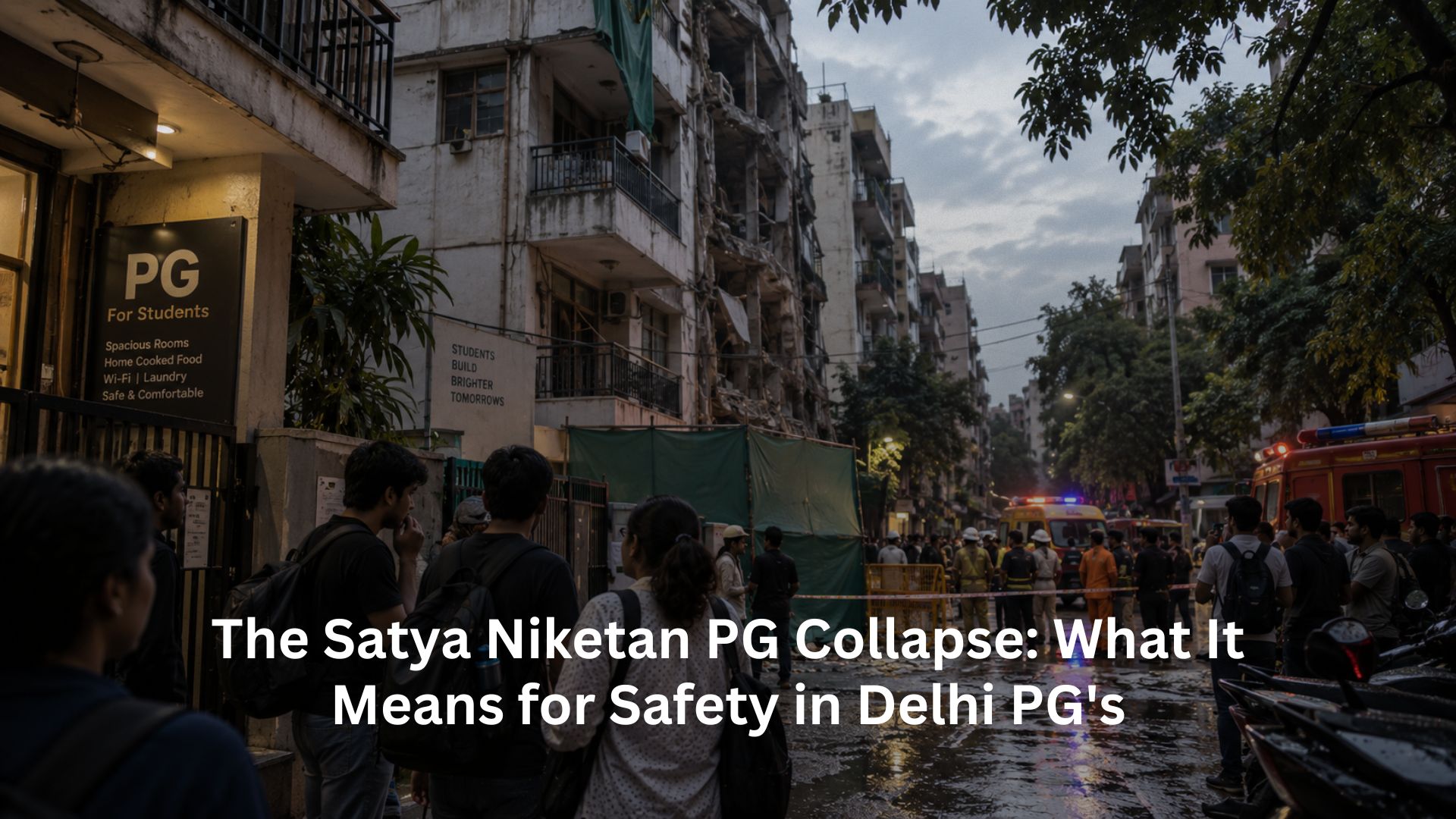
On Sunday afternoon, a residential building in Satya Niketan, one of Delhi’s well-known student accommodation hubs, collapsed while students were inside. The five-storey building, reportedly being used as a PG and hostel, became the site of a major rescue operation as authorities searched through the debris for people who might still be trapped.
At least six people have been confirmed dead, while several others have been rescued and taken for treatment. The building was located close to Delhi University’s South Campus, an area where large numbers of students live in privately operated PGs and hostels because college accommodation is limited.
The incident has understandably raised questions about the safety of student accommodation in the area. Reports have pointed to ongoing work in the basement and water accumulation among the circumstances being examined, while authorities continue investigating what exactly led to the collapse. At this stage, the final cause should not be assumed before the investigation is complete.
But there is a larger question that the incident brings into focus for every PG operator:
How seriously are we treating the safety of the buildings in which people live?
For a student, a PG is not simply another rental property. It is where they sleep, study, keep their belongings and spend a large part of their daily life. For parents, it is the place where their child is living away from home. And for an owner, that means managing a PG comes with responsibilities that go far beyond collecting rent and keeping rooms occupied.
What Happened in Satya Niketan?
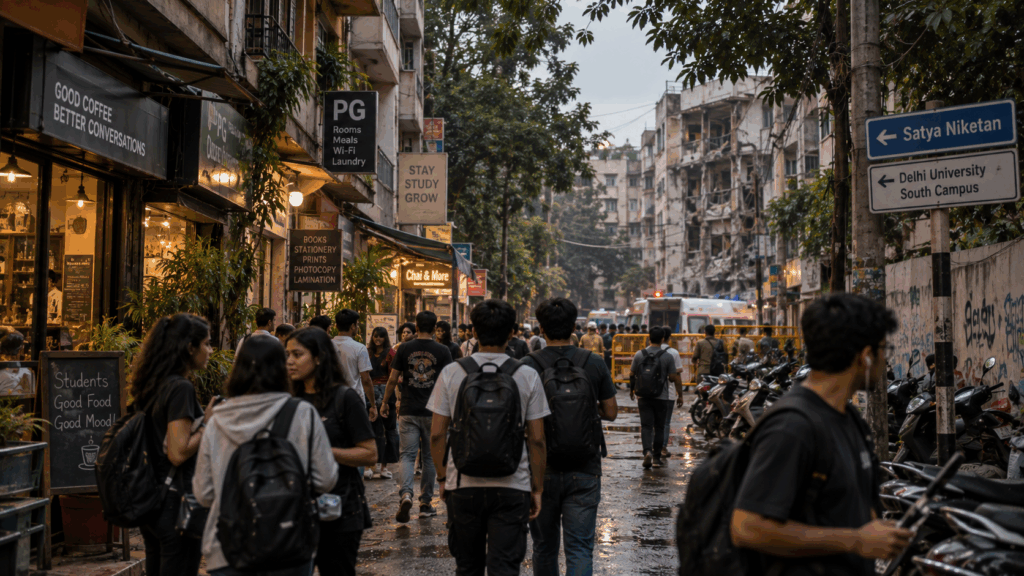
Satya Niketan has developed into a major student housing area because of its location near Delhi University’s South Campus. The neighbourhood has a dense concentration of PGs, hostels, eateries and other businesses serving the student population.
The demand for accommodation is understandable. Students coming to Delhi from different parts of India need places to stay close to their colleges, and university hostels cannot accommodate everyone. This has created a large private accommodation ecosystem around South Campus.
The building involved in Sunday’s incident was reportedly known as Hostel Daze and was being used as student accommodation. According to reports, construction or repair work was underway in its basement when the structure collapsed. The building was several decades old, and questions have been raised about its condition and whether recent work had any connection with the incident. Those questions are now for the authorities to investigate.
What makes the situation particularly disturbing is the number of students who were inside the building at the time. Many residents were reportedly in their rooms because it was a Sunday, and nearby colleges subsequently took steps to support students who were unable to safely return to their accommodation.
The incident has therefore affected more than just the residents of one building. It has made students, parents, educational institutions and property operators think more seriously about the condition of student accommodation across the neighbourhood.
Why Is Student Accommodation More Vulnerable?
A PG is different from a typical family residence. One building may house dozens of people across several floors. Residents share kitchens, bathrooms, corridors and staircases.
Electrical appliances may run throughout the day. Tenants may also change frequently. New residents often arrive without knowing the property’s history or condition.
This creates additional responsibilities for PG operators.
Students usually focus on practical questions when choosing accommodation. They may ask about rent, food, Wi-Fi and room-sharing options. Distance from college may also influence their decision.
However, most students cannot assess a building’s structural condition. They may not know whether maintenance has been completed properly. They may also miss risks linked to construction or renovation work.
The responsibility for these issues rests mainly with property owners and operators.
Safety should be considered before a property becomes a PG. It should not become a priority only after tenants move in.
Responsible operators should focus on four key areas:
- Building condition: Older properties need regular attention. Visible deterioration, water damage and unusual changes should not be ignored.
- Property usage: A PG can place greater demands on a building than a family home. Higher occupancy can increase electrical use and activity in shared areas.
- Construction and renovation: Major repairs, excavation or structural changes require careful planning. Technical assessments and required permissions should be obtained before work begins.
- Regular maintenance: Small problems can become serious when ignored. Operators should track issues and ensure they are properly resolved.
RentOk’s discussion of the hidden risks landlords face in PGs highlights a similar concern. Rental risks can develop quietly through poor maintenance, compliance gaps and weak day-to-day management.
For PG operators, safety is not just about responding to emergencies. It means identifying risks early and managing the property responsibly.
A Building Doesn’t Become Unsafe Overnight
One of the most important lessons from incidents like this is that property safety cannot be based only on what is visible on a normal day.
A building may look completely functional. Tenants may be living there without any obvious problems. Rent may be collected on time and occupancy may remain high. From an operational perspective, everything can appear to be working.
That does not mean every potential risk has been identified.
Water seepage may be ignored because it has become common. A crack may be painted over because it does not appear serious. Electrical connections may increase as tenants bring in more appliances. A common passage may gradually become a storage area. Maintenance work may be carried out without considering how it interacts with the rest of the property.
None of these situations automatically proves that a building is unsafe. But each is a reason for responsible management to pause and investigate instead of assuming that everything is fine.
This is where property management becomes important.
Safety is not only about responding when something goes wrong. It is about creating systems that make it easier to notice problems before they become emergencies.
What Safety Hazards Should PG Owners Be Looking At?
There is no single checklist that can determine whether a building is structurally safe. Structural assessments, fire-safety approvals and other technical matters need to be handled by the appropriate qualified professionals and authorities.
However, PG operators can still build stronger day-to-day safety practices around the property.
Some areas deserve particular attention:
- Water seepage and drainage: Repeated leakage, dampness or water accumulation should not simply be covered up or treated as a cosmetic issue. Persistent problems should be investigated, particularly when they affect basements, foundations or other important parts of the property.
- Renovation and structural work: Not every repair is a structural risk, but work involving excavation, structural elements, extensions or significant changes to the building requires appropriate professional assessment and compliance with applicable requirements.
- Electrical systems: PGs can have high electrical usage because several residents may use appliances at the same time. Damaged wiring, overloaded connections, unsafe extensions and poorly maintained electrical systems should be addressed promptly by qualified professionals.
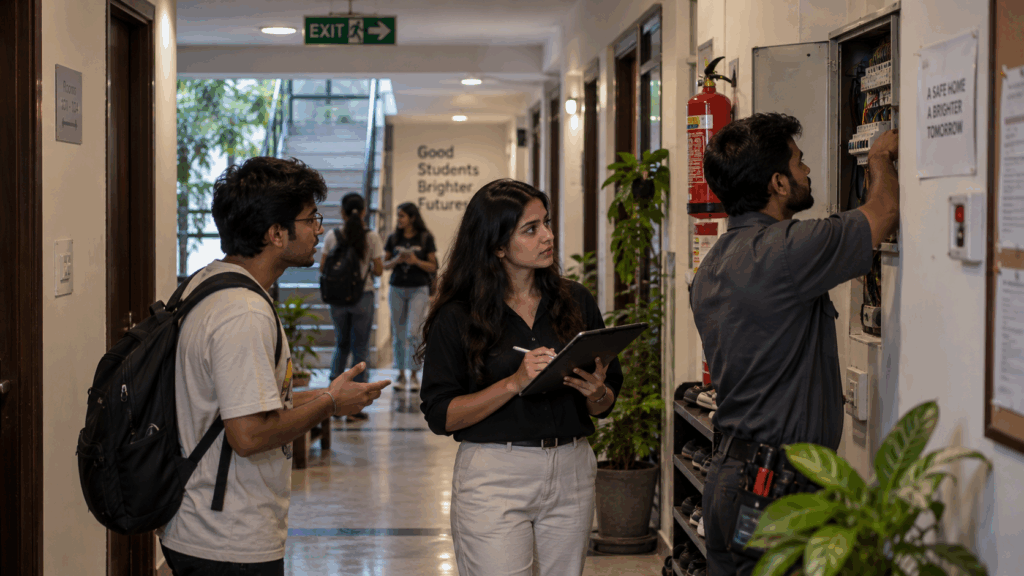
- Emergency routes: Corridors, staircases and exits need to remain usable. A passage that slowly becomes a storage area may not seem important during normal operations, but accessibility becomes critical during an emergency.
- Occupancy and property use: The number of people living in a building and the way different spaces are being used matter. Owners should make sure the property is being operated within applicable requirements rather than assuming that a residential building can automatically support any level of PG occupancy.
The key point is that safety problems should not become normal simply because they have been present for a long time.
Construction Work Needs More Than a Contractor
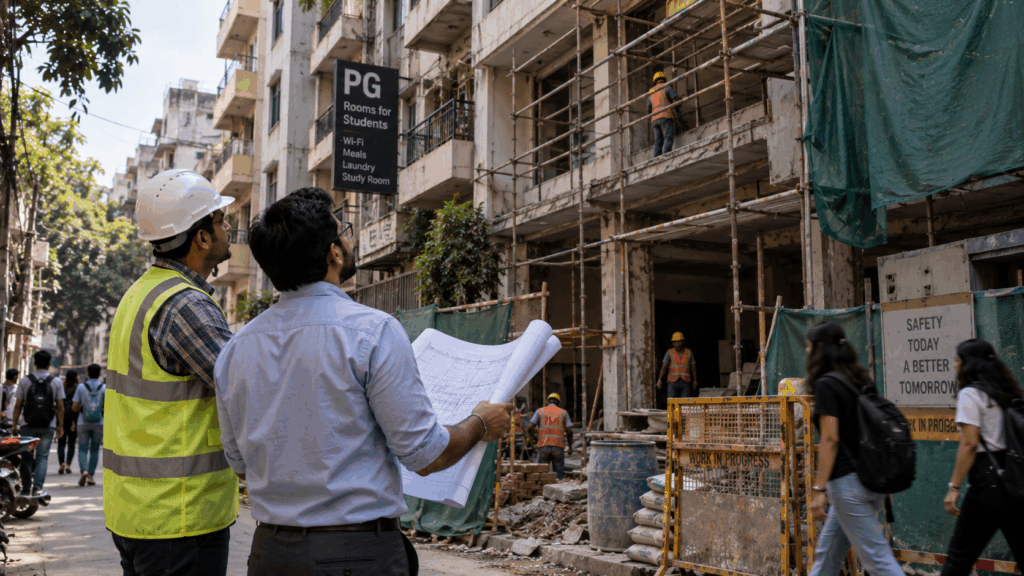
The reports surrounding the Satya Niketan collapse have brought particular attention to work being carried out in the building’s basement. Authorities are examining the circumstances and the possible role of recent work in the collapse. It is important to wait for the investigation before assigning a cause.
But the broader property-management lesson is still worth discussing.
Construction and renovation are not just another item on a PG owner’s maintenance list.
Whenever significant work is planned, owners need to understand what is being changed, who is carrying out the work, whether professional assessments are required, and whether the proposed work complies with the relevant rules and approvals.
This becomes especially important when a property is being adapted for a different purpose or when owners are trying to increase usable space.
More rooms may mean more revenue. Additional space may mean higher occupancy. A basement may appear to offer an opportunity to expand operations.
But additional income cannot come at the cost of compromising the safety or integrity of the property.
A responsible operator has to look at the long-term consequences of every major change, not just the immediate commercial benefit.
Maintenance Should Not Begin Only When Something Breaks
Maintenance is often treated as a cost that owners want to minimise. But in a PG, maintenance is closely connected to the quality and safety of the property.
The difference between reactive and preventive maintenance can be significant.
Reactive maintenance means waiting until something breaks and then trying to fix it. Preventive maintenance means regularly checking important systems and identifying issues before they become larger problems.
For example, if a plumbing problem is repeatedly reported and temporarily patched, the immediate complaint may disappear. But if the underlying issue is never investigated, the same problem can return or become more serious.
The same principle applies to electrical systems, appliances, water systems and common areas.
RentOk’s guide to handling maintenance requests in a PG explains why maintenance works better when complaints are treated as a structured workflow rather than scattered messages and verbal requests.
A strong maintenance process should make it possible to know:
- What was reported: Every important maintenance concern should have a clear record rather than relying on someone remembering a conversation.
- Who is responsible: The issue should move to the right person instead of sitting between the property manager, caretaker and vendor.
- What action was taken: Recording the work done creates visibility and helps identify recurring problems.
- Whether the issue was actually resolved: Closing a complaint should mean the problem has been addressed, not simply that someone has been informed about it.
This is particularly important for owners managing multiple properties because they cannot physically inspect every room and common area every day.
Safety Is Also About Tenant Awareness
Property owners carry responsibility for maintaining safe premises, but tenants also need to know how to respond when they notice a problem.
A new student moving into a PG may have no idea where the emergency exit is. They may not know whom to call if they notice water leaking near an electrical point. They may not know what to do if an alarm goes off or if an emergency requires everyone to leave the building.
That information should not be assumed to be obvious.
Tenant onboarding is an opportunity to communicate essential information before it is needed. Residents should know how to raise maintenance and safety concerns, whom to contact in an emergency and what basic procedures apply inside the property.
This does not mean overwhelming tenants with a long safety manual on their first day.
It means making important information easy to understand and easy to find.
RentOk’s guide to onboarding a new tenant discusses how structured onboarding can help property managers communicate important information consistently rather than depending on informal explanations.
For a PG with dozens of residents, that consistency matters.
Compliance Is Important, But It Is Not the Whole Safety Story
One of the easiest mistakes for a property owner to make is treating compliance as a one-time task.
An owner obtains the required approval, completes an inspection, installs the necessary equipment and assumes the property is now permanently “safe.”
But buildings change.
Occupancy changes. Layouts change. Electrical loads change. Repairs take place. New equipment is installed. Construction or renovation may be undertaken. Even common areas can gradually change as the property becomes more occupied.
That is why compliance and day-to-day property management need to work together.
RentOk’s recent article on what licences are required to run a PG in India explains that PG compliance can involve multiple requirements depending on the location, property, occupancy and services being offered. It also highlights an important point: compliance does not end once the PG opens.
The same thinking applies to safety.
A certificate can confirm compliance with applicable requirements at a particular point in time. It cannot replace responsible management of the property every day.
What Can PG Owners Do Differently?
The answer is not to turn every property manager into a building engineer. Safety involves technical areas that require qualified professionals.
The role of the PG operator is to make sure concerns are not ignored and that the right people are brought in when something requires specialist attention.
That means creating a culture where reporting a problem is encouraged, significant work is properly assessed, maintenance is tracked and important documentation is organised.
For a growing PG business, this can be supported by a few basic practices:
- Keep property records organised: Important approvals, inspections, maintenance records and other documents should be easy for authorised staff to access when required.
- Create clear escalation processes: Staff should know which problems they can handle themselves and which ones need an owner, engineer, technician or authority to be involved.
- Track recurring issues: If the same problem keeps appearing, it should trigger a closer review instead of being treated as another routine complaint.
- Review the property after major changes: Renovation, construction, increased occupancy or significant changes in how spaces are used should prompt the operator to review whether additional requirements or professional assessments apply.
- Keep tenants informed: Residents should have a simple way to report problems and receive updates when their complaints are being handled.
The objective is not more paperwork.
It is better visibility and faster action when something needs attention.
How RentOk Helps PG Owners Manage Their Properties More Systematically
RentOk cannot replace structural engineers, fire-safety authorities, building inspectors or other qualified professionals. What it can do is help PG owners bring more structure to the operational side of property management.
When tenant information, complaints, payments, occupancy records and daily tasks are scattered across spreadsheets, notebooks, phone calls and WhatsApp conversations, it becomes difficult for owners to know what is actually happening across their properties.
RentOk brings these workflows into a more organised system, helping operators manage tenants, track occupancy, handle complaints, monitor payments and maintain better visibility across day-to-day property operations.
This becomes particularly valuable when an owner manages multiple PGs or is not physically present at every property. Instead of relying entirely on verbal updates, management can work with structured information and clearer operational records.
And while technology cannot determine whether a building is structurally safe, it can help create the operational discipline around the property that responsible management requires.
That distinction matters.
A safer PG is not created by software alone. It is created when owners take safety seriously, qualified professionals are involved where necessary, maintenance issues are not ignored, tenants can raise concerns easily, and the management team has the systems needed to keep track of what is happening.
Final Thoughts
The Satya Niketan PG collapse has put student accommodation safety back in the spotlight. Six lives have already been lost, and authorities are still investigating the circumstances that led to the building’s collapse.
The exact cause of this particular incident must come from the investigation. But the wider lesson for Delhi’s PG industry does not need to wait.
A PG is not simply a collection of rooms that generates monthly rent. It is a place where people live. For students staying away from their families, it is their home in the city. That makes the condition of the building, the quality of its maintenance and the way its operations are managed extremely important.
Safety should therefore be built into the property from the beginning and maintained throughout its life.
Because the real measure of a well-managed PG is not just how full it is. It is how responsibly the people living inside it are looked after.
Frequently Asked Questions
Find answers to common questions about this topic
About the Author
Ishika Pannu
Ishika Pannu brings you the latest insights and easy-to-apply strategies in property management—helping you simplify renting and grow with RentOk.
You may also like these
Related Articles
1 min read
How to File a Rental Dispute Complaint in India (Step-by-Step Guide)
Written by
Posted on
Ishika Pannu
Sep 6, 2026
1 min read
What to Do If Your Landlord Refuses to Return Your Security Deposit
Written by
Posted on
Ishika Pannu
Sep 5, 2026
1 min read
Why Landlords Cannot Legally Refuse Unmarried Tenants in India
Written by
Posted on
Ishika Pannu
Sep 5, 2026
1 min read
How to Get Your Security Deposit Back When Vacating a Rental Property
Written by
Posted on
Ishika Pannu
Sep 5, 2026
1 min read
What Is Tenant Police Verification and Why Is It Mandatory in India?
Written by
Posted on
Ishika Pannu
Sep 4, 2026
1 min read
How to Read a Rent Agreement Before Signing: What to Watch Out For
Written by
Posted on
Ishika Pannu
Sep 4, 2026
1 min read
What Are Your Rights as a Tenant Under the Model Tenancy Act?
Written by
Posted on
Ishika Pannu
Sep 3, 2026

1 min read
How to Get FSSAI Licence for Your Hostel Mess or Canteen
Written by
Posted on
Ishika Pannu
Sep 3, 2026
1 min read
How to Use Digital Signatures on Rent Agreements Legally in India
Written by
Posted on
Ishika Pannu
Sep 1, 2026
1 min read
How to Get Society Permission Before Renting Out Your Flat
Written by
Posted on
Ishika Pannu
Aug 31, 2026
Stay ahead in property management with expert insights
Join thousands of property managers receiving exclusive tips delivered straight to your inbox.
Browse posts by category
Case Study
Cost of Living
Growth
Legal
Market Trends
News
Pg owner app
Property Management
Property Tax
Tech
RentOk
The easiest way to rent and manage your PGs and hostels.
Get the app


Contact us
hello@eazyapp.tech
HQ Office
COGROW, BASEMENT F-12/8A
BESIDE HOUSE OF STYLE SALON, SECTOR 28, DLF PHASE 1
GURUGRAM, HARYANA - 122002
South India Office
LUMIODESK COWORKING, 2ND FLOOR, 40, 14TH MAIN RD
BESIDE MC DONALD, 7TH SECTOR, HSR LAYOUT
BENGALURU, KARNATAKA - 560102
©️ 2026 EazyApp Tech Pvt Ltd. All rights reserved


