
Legal
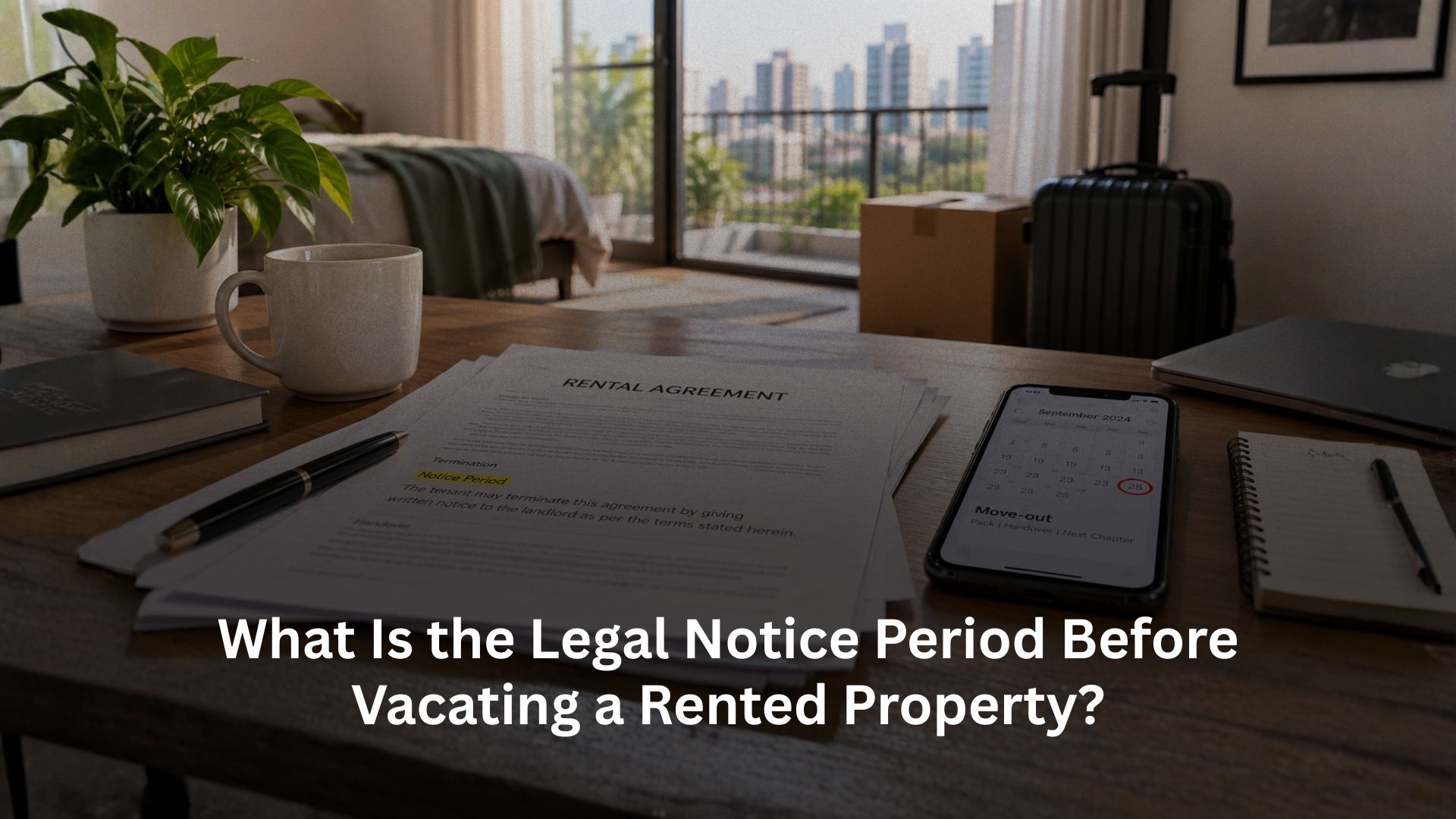
What Is the Legal Notice Period Before Vacating a Rented Property?

Written by
Ishika Pannu
Read Time
15 min read
Posted on
September 9, 2026
Overview
Overview
What Is the Legal Notice Period Before Vacating a Rented Property?
Moving out of a rented property seems simple until the question of notice comes up. A tenant may have already found a new home, planned the move, and informed the landlord. But there is still one important question: How much notice must a tenant give before vacating a rented property in India?
There is no single notice period that applies to every rental arrangement in India. In most cases, the first place to look is the rent agreement. The agreement may require 30 days, 60 days, 90 days, or another period. The applicable state or local tenancy law can also affect the position.
This is why the common statement that “tenants have to give one month’s notice” is not always correct. A notice period can depend on the contract and the law governing the tenancy.
For tenants, checking these terms before announcing a move can prevent unnecessary disputes. It can also avoid confusion around rent, security deposits, and the final handover.
What Does Your Rent Agreement Say?
Your rent agreement should be the first document you check before deciding when to move out. It sets out the terms accepted by both the tenant and landlord. This often includes the process for ending the tenancy.
Look for clauses titled Notice Period, Termination, Vacating, Exit, or Termination of Tenancy. The wording may also appear under a broader section dealing with the duration of the agreement.
The agreement may specify a fixed notice period. It may also explain what happens if the tenant leaves without serving the complete notice. Some agreements contain separate conditions for tenants who leave during a lock-in period.
Before sending your notice, check these points carefully:
- Notice duration: Confirm whether the agreement requires 30, 60, or 90 days of advance notice. Do not assume that the market practice in your city automatically applies to your tenancy.
- Notice method: Check whether the agreement requires written notice. It may also specify email, registered communication, or another documented method.
- Lock-in conditions: A lock-in period is different from a notice period. Leaving during the lock-in may create additional contractual consequences.
- Rent and deposit: Check how rent is calculated during the notice period. Also review the conditions for security deposit deductions and refunds.
- Handover process: Look for requirements related to inspection, keys, utility bills, cleaning, and the condition of the property.
The written agreement matters more than an informal conversation about what is “normally done.” A clear contract gives both sides a common reference point.
If you are still at the stage of reviewing your agreement, RentOk’s guide on How to Read a Rent Agreement Before Signing: What to Watch Out For can help you identify important clauses before you commit to them.

Is the Standard Notice Period in India Really 1–3 Months?
One to three months is a common range in residential rental agreements. However, this should not be treated as a universal legal requirement.
A 30-day notice period is common in many agreements. Some landlords and tenants agree to longer periods. The appropriate period can depend on the property, tenancy arrangement, agreement, and applicable law.
This distinction is important because rental rules are not completely uniform across India. Tenancy is largely governed at the state level. Different states and Union Territories can have different legal frameworks.
The Model Tenancy Act, 2021 provides a useful example. Under its framework, the tenant can give up possession by providing the notice specified in the tenancy agreement. If the agreement does not specify a notice period, the model framework provides for at least one month’s notice.
However, the Model Tenancy Act is not automatically applicable across India. It is a model framework that states and Union Territories may adopt or modify. The law applicable to a particular property must therefore be checked before relying on the MTA.
RentOk’s recent guide, What Are Your Rights as a Tenant Under the Model Tenancy Act?, explains this distinction in greater detail. It also covers written agreements, notice periods, termination, and other tenant rights under the model framework.
The key takeaway is simple: do not treat a commonly used notice period as a universal legal rule.
Can a Landlord Waive the Notice Period?
A landlord may agree to an earlier move-out in some situations. The important factor is whether both parties agree to the change.
A notice period exists to create time for both sides to prepare. The tenant gets time to arrange another property. The landlord gets time to plan for the next occupant. But circumstances can change, and parties may agree to a different exit arrangement.
For example, a landlord may agree to release a tenant early if a replacement tenant is already available. A tenant may also request an earlier exit because of a job transfer, college relocation, or another genuine change in circumstances.
If an earlier exit is agreed, document it.
A written confirmation should ideally state the revised move-out date. It should also clarify any remaining rent, charges, or deposit settlement. This reduces the chance of a disagreement after the tenant has already moved out.
A simple written record can confirm:
- The agreed move-out date: Both parties know exactly when possession will be handed over. This avoids later arguments about the remaining notice period.
- The final financial settlement: Any rent, utilities, maintenance charges, or other outstanding amounts can be identified before the handover.
- The security deposit process: The parties can confirm when the property will be inspected and how the final settlement will be handled.
- The handover requirements: Keys, access cards, appliances, and other property items can be returned through a clearly documented process.
A shorter notice period should therefore be treated as a mutually agreed arrangement, not an assumption made by either side.
What Happens If You Leave Without Giving Notice?
Leaving without serving the required notice can create contractual and financial complications.
The exact consequences depend on the agreement and the applicable legal framework. A landlord may have a contractual right to claim amounts connected with the unserved notice. A separate clause may also apply if the tenant is leaving during a lock-in period.
This is where tenants often make a costly mistake. They treat the notice period and lock-in period as the same thing.
They are not.
The notice period generally concerns the amount of advance notice required before ending the tenancy. The lock-in period can create a minimum commitment and may contain separate consequences for early termination.
For example, an agreement could contain a six-month lock-in and a 30-day notice period. If a tenant decides to leave during the third month, simply giving 30 days’ notice may not settle the entire issue. The agreement needs to be checked for its early-exit terms.
RentOk’s article on Managing Tenant Lock-in Periods Without Conflict explores this distinction from an operational perspective. It explains why clear exit terms can reduce disputes between property operators and tenants.
The safest approach is to review the agreement before fixing your final move-out date.
What If Your Agreement Does Not Mention a Notice Period?
An agreement that does not mention a notice period does not necessarily mean that a tenant can leave without any advance notice.
When the contract is silent, the applicable legal framework becomes more important. The answer can depend on the nature of the tenancy, the location of the property, and the laws that apply there.
The Model Tenancy Act provides a specific position. Where a tenancy agreement does not stipulate a notice period, its framework provides for at least one month’s notice before the tenant gives up possession.
That does not mean every tenant in India can automatically rely on this rule. The MTA is a model framework, not a nationwide tenancy law that applies by default.
RentOk’s article, What is the Model Tenancy Act and How Does It Protect Landlords?, provides useful background on how the MTA works. It also explains why state-level adoption matters when determining which rules apply to a particular rental property.
There can also be other statutory provisions that become relevant when an agreement does not address termination. For example, Section 106 of the Transfer of Property Act contains certain notice rules for leases. Those rules are not a universal replacement for contractual or state-specific tenancy provisions.
This is why a tenant should avoid relying on a fixed number found in a general online article. The agreement and applicable law should be considered together.

What Should You Include in a Vacating Notice?
Once you know the applicable notice period, the next step is to communicate your decision clearly.
A vacating notice does not need to be complicated. It should create a clear record of your intention to end the tenancy. It should also identify the date on which you intend to hand over the property.
A practical notice should include:
- Property details: Mention the property address and room or unit number where relevant. This removes any ambiguity about the premises being vacated.
- Proposed move-out date: State the exact date on which you intend to leave. Make sure the date is consistent with the required notice period.
- Reference to the agreement: Mention the relevant tenancy agreement if appropriate. This makes the contractual basis of the notice easier to identify.
- Handover request: Ask the landlord or property manager to confirm the inspection, key handover, and final settlement process.
- Written record: Keep a copy of the notice and any response. A documented communication trail can be useful if a disagreement develops later.
The purpose of the notice is clarity. It should make it easy for both parties to understand what happens next.
What Happens to Your Security Deposit When You Vacate?
Moving out involves more than serving notice. The security deposit is often another important part of the final settlement.
Tenants should review the deposit clause before moving out. It may specify the conditions under which deductions can be made. It may also state when the remaining amount will be refunded.
A tenant should keep records throughout the tenancy. These can include payment receipts, photographs of the property, repair requests, and important conversations with the landlord.
The same principle applies at move-out. Document the condition of the property and keep proof of the handover where appropriate.
A final settlement may involve:
- Outstanding rent or utilities: Any unpaid amount should be identified and matched with the relevant payment records.
- Property damage: Legitimate deductions may depend on the agreement and the nature of the damage. Normal wear and tear should not simply be treated as tenant-caused damage.
- Other agreed charges: Maintenance, service charges, or other contractual amounts may need to be settled before the tenancy closes.
- Deposit refund: The remaining balance should be calculated after legitimate adjustments. The agreement and applicable law can determine the relevant process.
RentOk’s guide on How to Get Your Security Deposit Back When Vacating a Rental Property provides more detail on the move-out and deposit process.
Good documentation helps both parties. It makes the final settlement easier to understand and reduces unnecessary arguments.
Notice Period vs Lock-in Period: What Is the Difference?
The distinction between these two clauses deserves special attention.
A notice period deals with advance communication. It tells the parties how much time should normally be given before the tenancy ends.
A lock-in period deals with the minimum period agreed for the tenancy. Leaving before that period ends may have separate consequences under the contract.
Consider a simple example. A tenant signs an agreement with a six-month lock-in and a 30-day notice period. The tenant decides to move out after three months.
The 30-day notice clause does not automatically mean the tenant can leave without considering the lock-in. The agreement may contain a separate early-exit condition.
This is why both clauses should be read together.
The distinction also matters for landlords and property managers. Unexpected exits can affect occupancy, revenue forecasting, room preparation, and new tenant onboarding. Clear exit terms can make these processes easier to manage.
RentOk’s guide to managing tenant lock-in periods looks at the issue from the property operator’s perspective. It explains why professional exit management is about predictability, communication, and proper documentation.
What Does the Model Tenancy Act Say About Notice Periods?
The Model Tenancy Act, 2021 is particularly relevant because it provides a structured framework for rental relationships.
Its approach to notice periods is relatively straightforward. The tenant can give up possession by providing the notice required under the tenancy agreement. If the agreement does not contain a notice provision, the model framework provides for at least one month’s notice.
But the most important part is the qualification.
The Model Tenancy Act does not automatically govern every rental property in India. Tenancy is a state subject. States and Union Territories can adopt the model framework, modify it, or continue under their existing laws.
That means the MTA should be understood as a framework rather than a single nationwide answer to every rental question.
This distinction is especially important for tenants searching online for legal information. A statement such as “the Model Tenancy Act gives every tenant a one-month notice period” is too broad.
The actual legal position should be checked against the applicable state or UT framework and the tenancy agreement.
For a broader understanding of the MTA, RentOk’s What Are Your Rights as a Tenant Under the Model Tenancy Act? is a strong related resource to read alongside this article. It covers the wider relationship between tenants, landlords, written agreements, deposits, termination, and dispute resolution.
A Practical Checklist Before You Move Out
Before sending your notice, review the entire exit process. Do not focus only on the number of days.
A quick check can prevent many avoidable problems:
- Read the termination clause: Confirm the required notice period and check whether any special conditions apply to your tenancy.
- Check the lock-in period: Make sure you know whether your planned move-out falls within the lock-in period and what the agreement says about early termination.
- Calculate your final dues: Review rent, utilities, maintenance, and other charges before setting your final payment and handover date.
- Review the deposit clause: Understand the possible deductions and the process for calculating the final refundable amount.
- Document the property: Take relevant photographs or videos before leaving. Keep records of the property’s condition and any previous repair issues.
- Confirm the handover: Agree on the inspection, key return, meter readings, and final settlement process with the landlord or property manager.
- Keep your records: Save the agreement, payment receipts, notice, responses, and final settlement documents after the tenancy ends.
These steps may take only a little time. They can make the difference between a smooth exit and a prolonged disagreement.

How RentOk Helps You Manage Your Rental Journey
Managing a rental relationship becomes harder when important information is spread across WhatsApp chats, spreadsheets, payment screenshots, registers, and separate documents.
RentOk brings key rental operations into a more organised platform. Landlords and property managers can manage tenant information, payments, occupancy, agreements, deposits, complaints, and other property workflows in one place.
This creates better visibility across the tenant lifecycle. Important records are easier to track when a tenant moves in, makes payments, raises a complaint, or prepares to move out.
For tenants, organised rental processes can also make communication easier. Important payment information and property-related updates can be managed through a more structured system.
RentOk does not replace legal advice. It also does not determine which tenancy law applies to a particular property. What it does is provide an organised operational foundation for managing rental relationships more efficiently.
Conclusion
There is no single notice period that applies to every rented property in India. The first step is to read your rent agreement. Then, check the tenancy law that applies to your property.
One to three months is common in rental agreements. It is not a universal legal rule. The Model Tenancy Act provides for at least one month’s notice where the agreement does not specify a notice period. Yet the MTA is a model framework and does not automatically apply across India.
A smooth move-out starts with clarity. Check your notice clause, understand the lock-in period, communicate your decision in writing, settle your dues, and document the handover. If a serious legal dispute arises, professional legal advice is the safest route.
For a more organised rental experience, Manage Your Rental Journey with RentOk and discover how structured property management can make tenant and property operations simpler, clearer, and more efficient.
Frequently Asked Questions
Find answers to common questions about this topic
About the Author
Ishika Pannu
Ishika Pannu brings you the latest insights and easy-to-apply strategies in property management—helping you simplify renting and grow with RentOk.
You may also like these
Related Articles

1 min read
What Documents Do You Need for Tenant Police Verification?
Written by
Posted on
Ishika Pannu
Sep 10, 2026

1 min read
Why You Should Always Insist on a Registered Rent Agreement
Written by
Posted on
Ishika Pannu
Sep 10, 2026

1 min read
Delhi’s Proposed PG Regulations: What Owners Need to Know
Written by
Posted on
Ishika Pannu
Sep 9, 2026

1 min read
The Satya Niketan PG Collapse: What It Means for Safety in Delhi PG’s
Written by
Posted on
Ishika Pannu
Sep 7, 2026
1 min read
How to File a Rental Dispute Complaint in India (Step-by-Step Guide)
Written by
Posted on
Ishika Pannu
Sep 6, 2026

1 min read
What to Do If Your Landlord Refuses to Return Your Security Deposit
Written by
Posted on
Ishika Pannu
Sep 5, 2026

1 min read
Why Landlords Cannot Legally Refuse Unmarried Tenants in India
Written by
Posted on
Ishika Pannu
Sep 5, 2026

1 min read
How to Get Your Security Deposit Back When Vacating a Rental Property
Written by
Posted on
Ishika Pannu
Sep 5, 2026

1 min read
What Is Tenant Police Verification and Why Is It Mandatory in India?
Written by
Posted on
Ishika Pannu
Sep 4, 2026

1 min read
How to Read a Rent Agreement Before Signing: What to Watch Out For
Written by
Posted on
Ishika Pannu
Sep 4, 2026
Stay ahead in property management with expert insights
Join thousands of property managers receiving exclusive tips delivered straight to your inbox.
Browse posts by category
Case Study
Cost of Living
Growth
Legal
Market Trends
News
Pg owner app
Property Management
Property Tax
Tech
RentOk
The easiest way to rent and manage your PGs and hostels.
Get the app


Contact us
hello@eazyapp.tech
HQ Office
COGROW, BASEMENT F-12/8A
BESIDE HOUSE OF STYLE SALON, SECTOR 28, DLF PHASE 1
GURUGRAM, HARYANA - 122002
South India Office
LUMIODESK COWORKING, 2ND FLOOR, 40, 14TH MAIN RD
BESIDE MC DONALD, 7TH SECTOR, HSR LAYOUT
BENGALURU, KARNATAKA - 560102
©️ 2026 EazyApp Tech Pvt Ltd. All rights reserved


