
Legal
Delhi’s Proposed PG Regulations: What Owners Need to Know

Written by
Ishika Pannu
Read Time
10 min read
Posted on
September 9, 2026
Overview
Overview
Delhi’s Proposed PG Regulations: What Owners Need to Know
Delhi’s PG sector has grown rapidly with thousands of students coming to the city every year for colleges, universities and coaching institutes. Areas such as Satya Niketan, Mukherjee Nagar, Rajendra Nagar, Laxmi Nagar, Munirka and the neighbourhoods around North and South Campus have become major student-housing hubs.
But as the sector has grown, so has the need for better oversight.
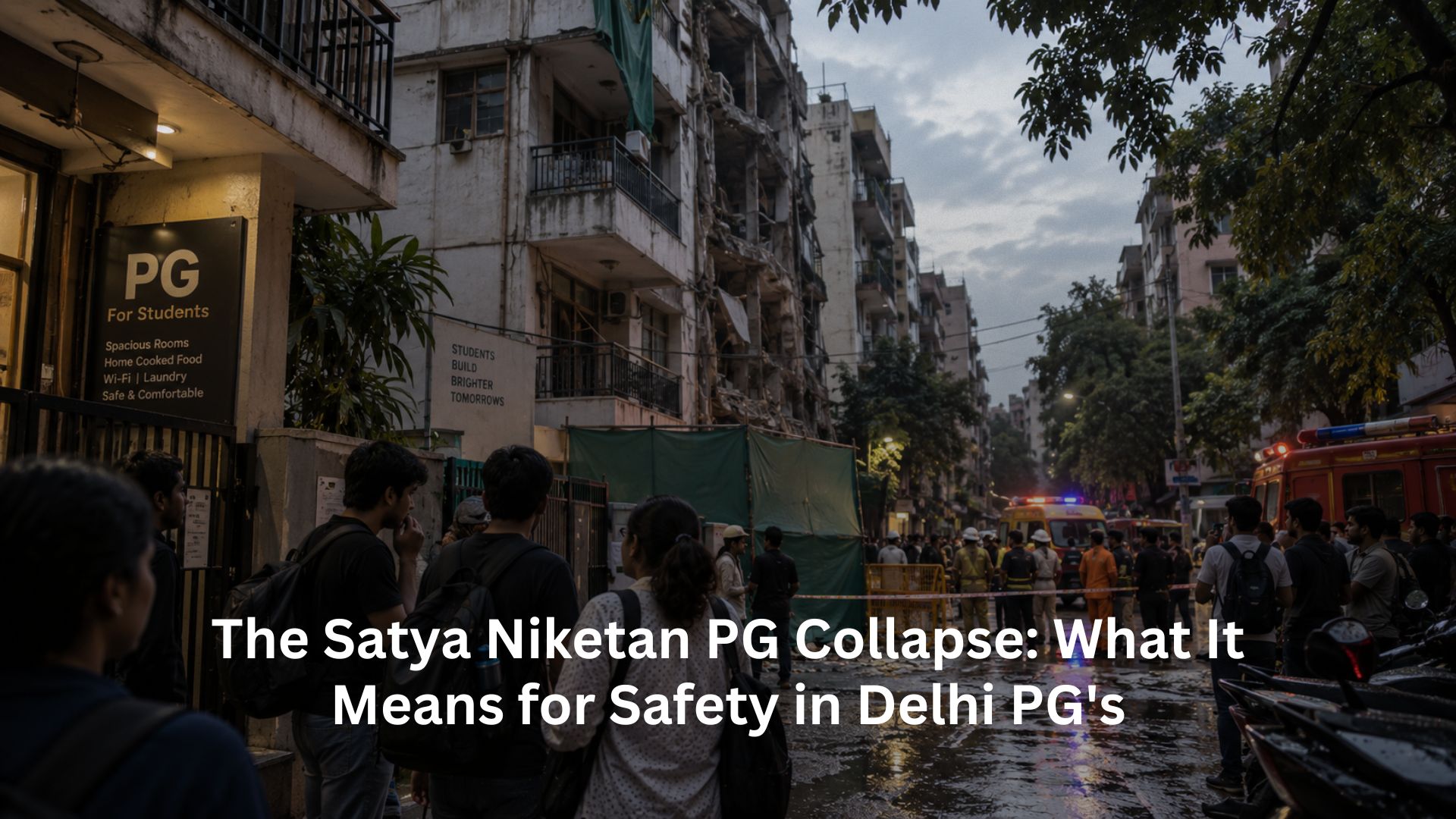
The recent collapse of a five-storey PG building in Satya Niketan, which claimed seven lives, has brought this question into focus: how can Delhi make student accommodation safer, more transparent and more accountable?
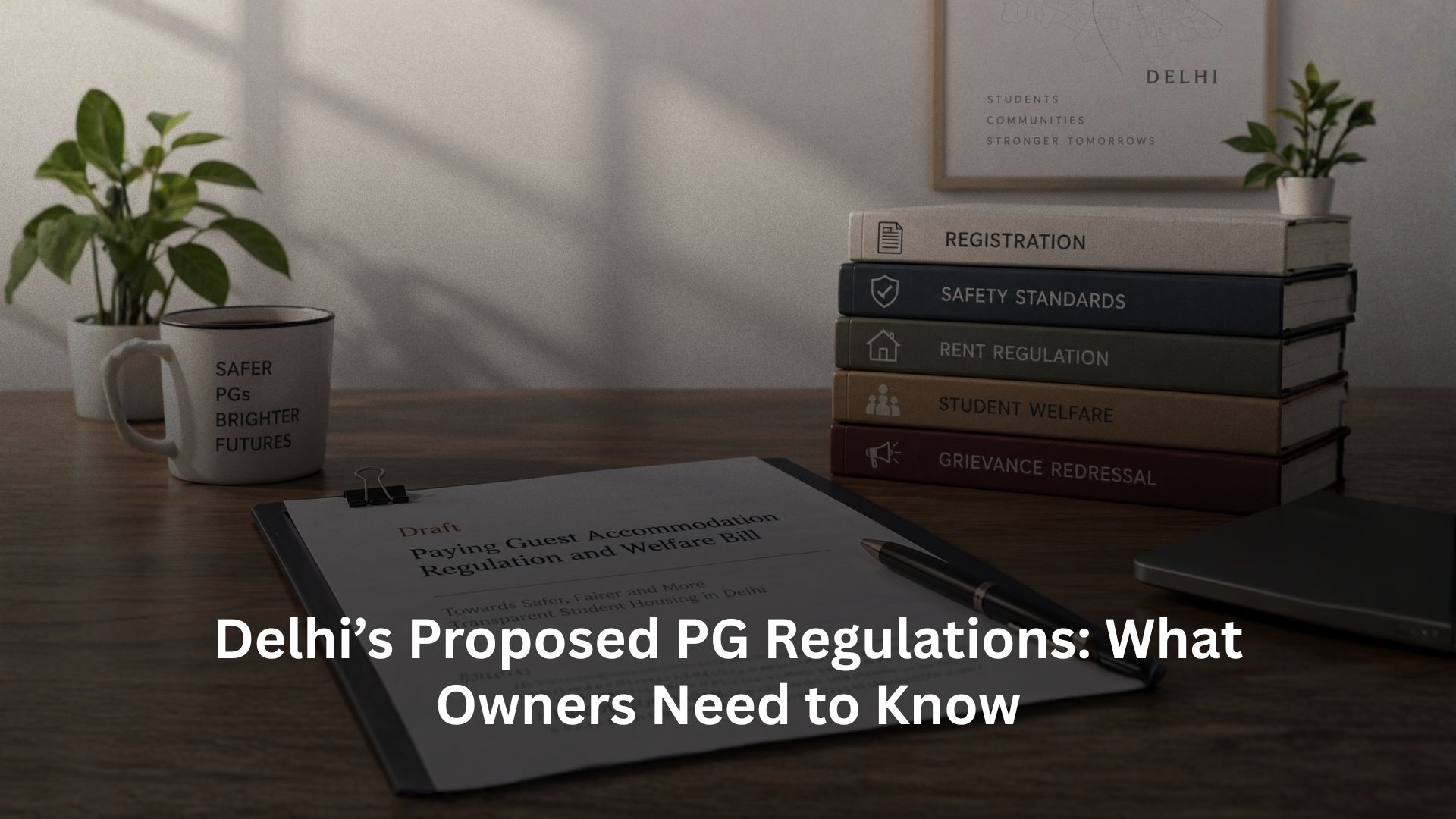
In response, the Delhi government is working on a proposed Paying Guest Accommodation Regulation and Welfare Bill. The draft looks at everything from PG registration and safety to rent, security and complaint handling.
The important thing to remember is that this is still a draft. The government has said it will consult students, parents, PG operators, civic agencies and other stakeholders before finalising the policy. Officials have indicated that the comprehensive policy could be introduced within the next one to two months.
So, what exactly is being proposed?
What the Draft PG Regulations Could Change
The current draft covers several areas of PG operations. While these provisions may change before the final policy is introduced, they give owners and students an idea of what the future of PG regulation in Delhi could look like.
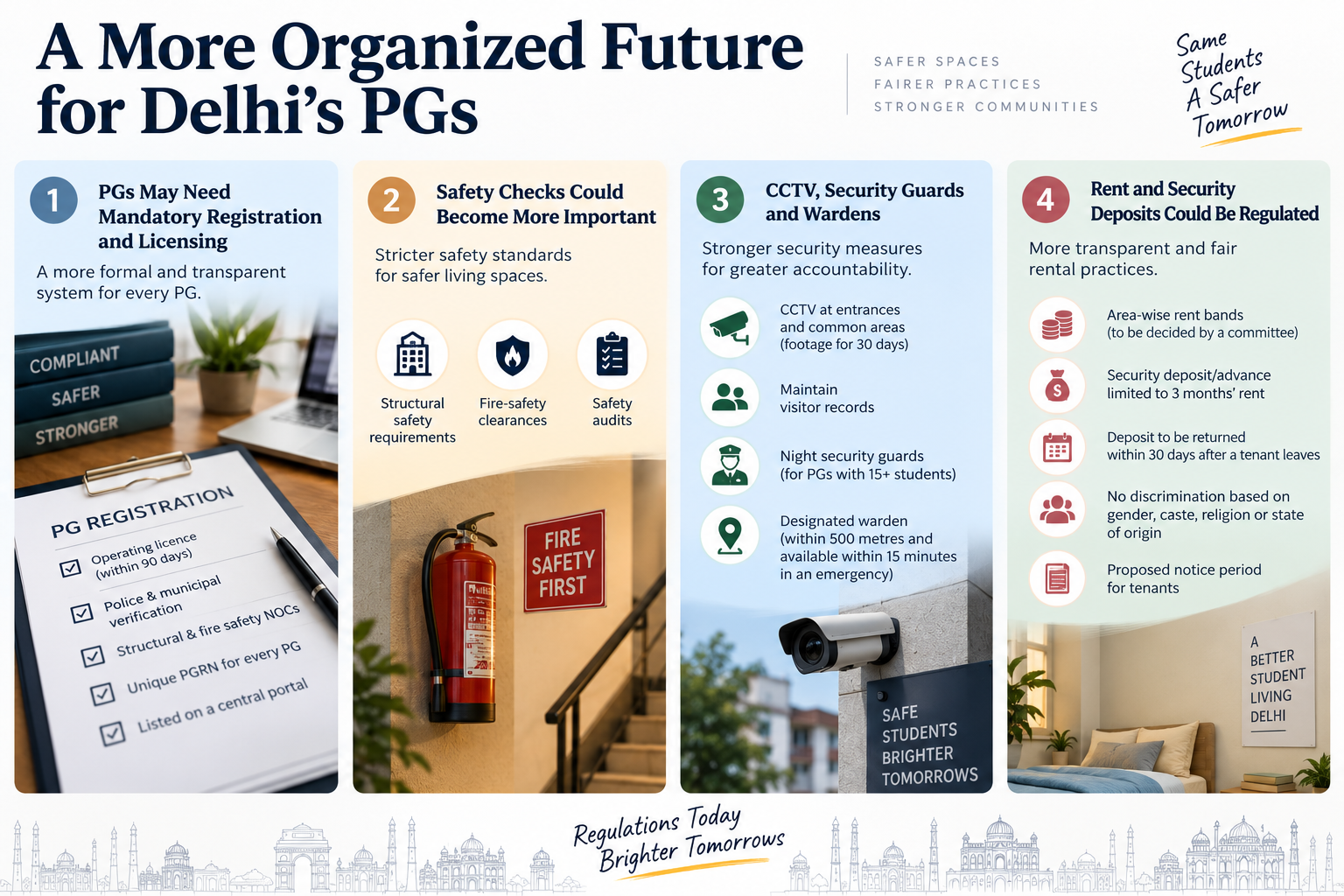
1. PGs May Need Mandatory Registration and Licensing
Under the proposed framework, every PG would have to formally register with the authorities and obtain an operating licence.
The current draft proposes:
- A 90-day window to obtain the required licence.
- Police and municipal verification.
- NOCs relating to structural and fire safety.
- A unique Paying Guest Registration Number (PGRN) for every approved PG.
- Listing registered PGs on a central digital platform.
This would give authorities a clearer record of which PGs are operating, who is responsible for them and how many students they accommodate.
It could also make verification easier for students looking for accommodation.
For owners, formal registration also means keeping property and tenant information organised will become increasingly important. This connects closely with “The PG Owner’s Guide to Tenant Background Verification in 2026”, which looks at how owners can approach tenant verification in a more structured way.
2. Safety Checks Could Become More Important
Safety is at the centre of the proposed framework.
The draft includes structural and fire-safety requirements for PGs, along with safety audits and clearances as part of the approval process.
The bigger change, however, could be in how owners approach safety on a regular basis. A property cannot be considered safe simply because it passed a check once. Maintenance issues, damage and other concerns need attention throughout the year.
That makes regular property checks and timely maintenance especially important for PG operators.
3. CCTV, Security Guards and Wardens
The proposed rules also introduce stronger security requirements for PGs.
Registered PGs would need to:
- Install functional CCTV cameras at entrances and common areas.
- Retain CCTV footage for at least 30 days.
- Maintain visitor records.
- Provide licensed night security guards for PGs housing 15 or more students.
The draft also proposes a designated warden who would need to live or maintain an office within 500 metres of the PG and be physically available within 15 minutes of an emergency call.
This means that staffing and responsibilities could become a more structured part of PG operations.
For owners managing multiple staff members, having clear responsibilities becomes important. “How to Manage PG Staff Efficiently” covers how owners can organise staff responsibilities and maintain better visibility over day-to-day operations.
4. Rent and Security Deposits Could Be Regulated
The proposed framework also addresses one of the biggest concerns for students: rental charges.
A Rent Regulation Committee has been proposed to determine area-wise rent bands for PG accommodation.
The draft also proposes:
- Security deposits and advance payments cannot exceed three months’ rent.
- Security deposits should be returned within 30 days after a tenant leaves, subject to the applicable conditions.
- PGs cannot charge different rents based on gender, caste, religion or state of origin.
- A proposed notice period would apply when students leave their accommodation.
If these provisions make it into the final framework, keeping clear records of rent, deposits, payments and refunds will become even more important for owners.
A Government Portal Could Make PGs Easier to Verify
One of the more significant proposals is the GovPG portal, which would act as a central platform for registered PGs.
The proposed portal could provide information such as:
- PG registration details.
- Capacity and occupancy.
- Rent and facilities.
- Security arrangements.
- Compliance information.
- Complaint submission and tracking.
Students may also be able to submit complaints anonymously through the platform.
This could change the way students choose accommodation. Instead of depending only on brokers, recommendations or online listings, students could have access to more information before choosing a PG.
It also means communication between owners and tenants could become more important. When complaints, updates and important notices are scattered across different conversations, it becomes harder to maintain a clear record.
Our blog “Best Communication Channels for Property Management” looks at how better communication systems can help owners stay more organised while managing tenants.
Complaints Could Follow a More Formal Process
The draft also proposes giving colleges, universities and registered coaching institutes a role in monitoring student accommodation.
An Institutional Accommodation Committee (IAC) could include faculty members, student representatives, municipal officials and a police liaison officer. The proposed framework would give these committees a role in inspections and grievance resolution.
This could make complaint handling a much more visible part of PG management.
For owners, a complaint should not simply remain buried in a WhatsApp message or be forgotten after a phone call. It should be possible to see what was reported, who is handling it and whether it has been resolved.
A simple process can make a big difference:
Complaint raised → Assigned → Action taken → Resolved
That kind of visibility also becomes useful when a property has a large number of tenants or multiple people managing daily operations.
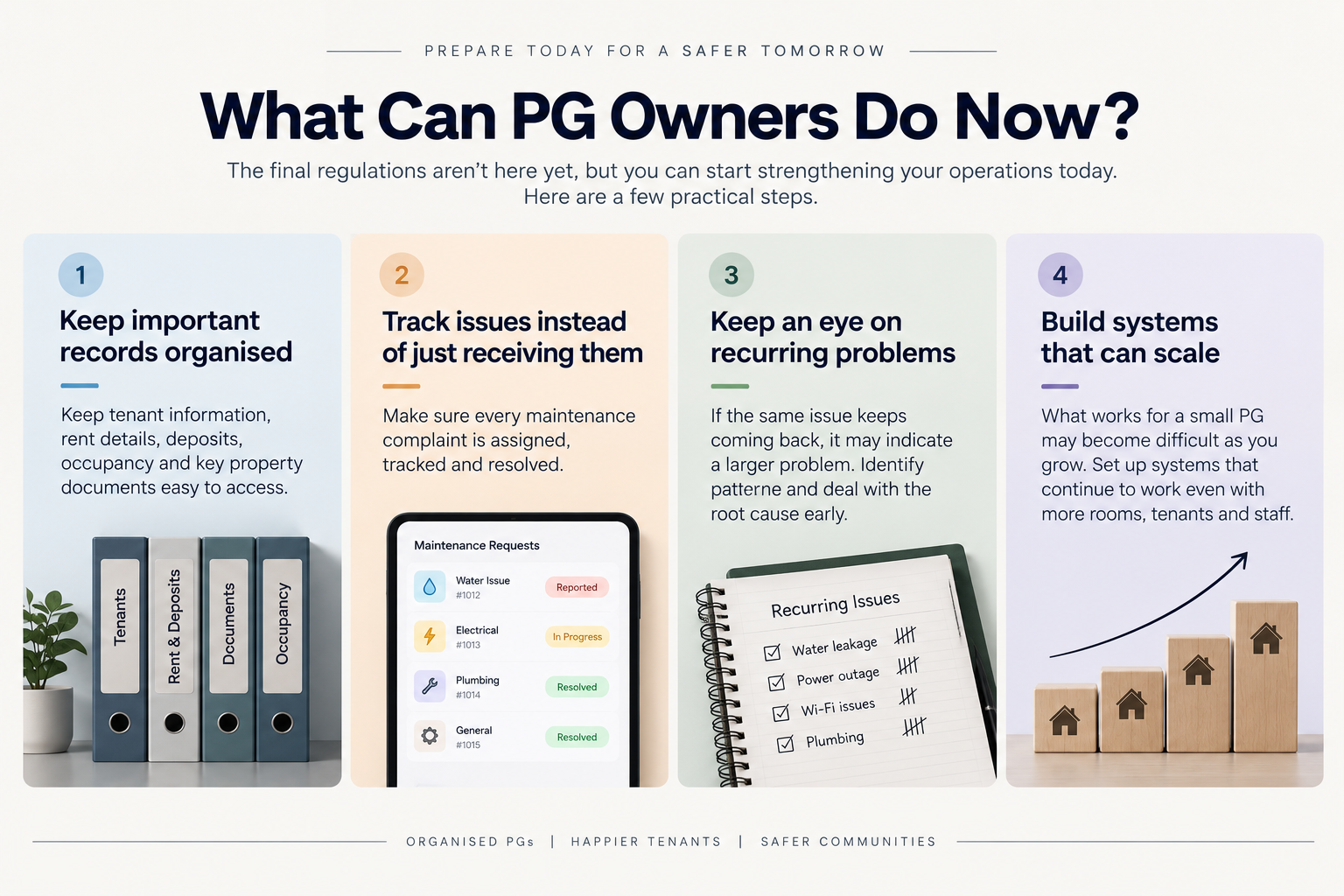
What Can PG Owners Do Now?
The final regulations are not here yet, so owners should not treat the current draft as a final compliance checklist.
However, there is no reason to wait before improving the basics of PG management.
Keep important records organised
Tenant information, rent details, deposits, occupancy and important property documents should be easy to access.
As the proposed system becomes more formal, owners with organised records will likely find it easier to adapt.
Track issues instead of just receiving them
A maintenance complaint should have a clear status. If a tenant reports a plumbing, electrical or infrastructure problem, the owner should know whether someone has been assigned to it and whether the problem has actually been fixed.
For owners looking to improve this process, “How to Automate PG Management Completely” explores how technology can reduce the amount of manual coordination involved in everyday PG operations.
Keep an eye on recurring problems
If the same issue keeps coming back, it may indicate a larger maintenance problem.
For example, repeatedly fixing the same leakage may not be enough if the underlying cause has not been addressed.
Good property management is not only about responding to problems. It is also about identifying patterns and dealing with them early.
Build systems that can scale
What works for a small PG may become difficult when there are more rooms, tenants and staff.
Manual registers, scattered spreadsheets and individual follow-ups can quickly become difficult to manage as the property grows.
Our guide “Why Small Landlords Need Property Management Software” explores why having a proper management system can become increasingly useful as a rental operation expands.
The Government Is Still Working on the Framework
One important part of the current development is that the government is not treating the draft as a finished rulebook.
Urban Development Minister Ashish Sood has said that the government will consult students, parents, PG operators and other stakeholders, along with relevant departments and agencies, before finalising the policy. The aim is to understand concerns from the people who actually operate and use these accommodations.
Officials have indicated that the comprehensive policy could be brought forward within the next one to two months, although the exact provisions and implementation process could still change.
For PG owners, this period is less about rushing to comply with rules that are not final yet and more about understanding where the sector is heading.
How RentOk Helps
If Delhi moves towards a more formal PG framework, owners will need better visibility over their everyday operations.
RentOk helps bring important parts of PG management together, including tenant management, complaints, maintenance and day-to-day property operations.
Instead of relying entirely on paper records, spreadsheets or scattered conversations, owners can have a more organised way to keep track of what is happening across their property.
For example, when a tenant raises a maintenance issue, it can be recorded and followed through to resolution. Tenant information and operational details can also be kept more organised as the property grows.
RentOk does not replace government licences, safety audits or statutory approvals. But it can help owners build the organised operational system needed to manage their PG more effectively.
What Could This Mean for Delhi’s PG Sector?
The proposed regulations are still taking shape, and the final framework could look different from the current draft.
But the direction is clear.
Delhi is looking at a PG sector with more registration, greater safety oversight, clearer rental practices, stronger grievance mechanisms and better visibility for students.
For owners, adapting to this future does not have to begin with the final Bill.
It can begin with something much simpler: knowing what is happening in your property, keeping proper records, responding to problems on time and creating systems that make day-to-day management easier.
Because running a successful PG is not only about filling rooms.
It is about managing the property, the operations and the people living in it responsibly.
Frequently Asked Questions
Find answers to common questions about this topic
About the Author
Ishika Pannu
Ishika Pannu brings you the latest insights and easy-to-apply strategies in property management—helping you simplify renting and grow with RentOk.
You may also like these
Related Articles
1 min read
The Satya Niketan PG Collapse: What It Means for Safety in Delhi PG’s
Written by
Posted on
Ishika Pannu
Sep 7, 2026
1 min read
How to File a Rental Dispute Complaint in India (Step-by-Step Guide)
Written by
Posted on
Ishika Pannu
Sep 6, 2026

1 min read
What to Do If Your Landlord Refuses to Return Your Security Deposit
Written by
Posted on
Ishika Pannu
Sep 5, 2026
1 min read
Why Landlords Cannot Legally Refuse Unmarried Tenants in India
Written by
Posted on
Ishika Pannu
Sep 5, 2026
1 min read
How to Get Your Security Deposit Back When Vacating a Rental Property
Written by
Posted on
Ishika Pannu
Sep 5, 2026
1 min read
What Is Tenant Police Verification and Why Is It Mandatory in India?
Written by
Posted on
Ishika Pannu
Sep 4, 2026
1 min read
How to Read a Rent Agreement Before Signing: What to Watch Out For
Written by
Posted on
Ishika Pannu
Sep 4, 2026
1 min read
What Are Your Rights as a Tenant Under the Model Tenancy Act?
Written by
Posted on
Ishika Pannu
Sep 3, 2026

1 min read
How to Get FSSAI Licence for Your Hostel Mess or Canteen
Written by
Posted on
Ishika Pannu
Sep 3, 2026
1 min read
How to Use Digital Signatures on Rent Agreements Legally in India
Written by
Posted on
Ishika Pannu
Sep 1, 2026
Stay ahead in property management with expert insights
Join thousands of property managers receiving exclusive tips delivered straight to your inbox.
Browse posts by category
Case Study
Cost of Living
Growth
Legal
Market Trends
News
Pg owner app
Property Management
Property Tax
Tech
RentOk
The easiest way to rent and manage your PGs and hostels.
Get the app


Contact us
hello@eazyapp.tech
HQ Office
COGROW, BASEMENT F-12/8A
BESIDE HOUSE OF STYLE SALON, SECTOR 28, DLF PHASE 1
GURUGRAM, HARYANA - 122002
South India Office
LUMIODESK COWORKING, 2ND FLOOR, 40, 14TH MAIN RD
BESIDE MC DONALD, 7TH SECTOR, HSR LAYOUT
BENGALURU, KARNATAKA - 560102
©️ 2026 EazyApp Tech Pvt Ltd. All rights reserved


