Property Management
Digital Visitor Management for PGs: A Simple Guide

Written by
Ishika Pannu
Read Time
12 min read
Posted on
June 25, 2026
Overview
Overview
Digital Visitor Management for PGs: A Simple Guide
Running a PG or co-living space today involves much more than managing rent, occupancy, and maintenance. As properties become larger and tenant expectations continue to evolve, security has become a core part of day-to-day operations. One area that often gets overlooked is visitor management.
Whether it’s a friend visiting a resident, a food delivery executive, a housekeeping vendor, or a maintenance technician, every visitor entering your property creates a security and operational responsibility. In smaller PGs, this responsibility is often handled through handwritten registers or verbal approvals. While this may seem manageable at first, the process quickly becomes inefficient as occupancy grows.
Think about a property with 25 tenants. The owner or manager may personally know most residents and can easily recognize regular visitors. Now compare that with a PG housing 200 residents across multiple floors. Dozens of visitors may enter the property every day. Without a structured system, tracking who entered, whom they visited, when they arrived, and when they left becomes increasingly difficult.
This is why digital visitor management is becoming a standard feature in professionally managed rental businesses. It is no longer just about replacing a paper register with a digital screen. It is about creating a secure, transparent, and efficient process that protects tenants while making property operations easier to manage.
Why Visitor Management Is No Longer Just a Security Measure
Many property owners think of visitor management as a task assigned to the security guard or reception desk. In reality, it affects several aspects of property management, from tenant trust to emergency response and operational efficiency.
When visitor records are incomplete or maintained manually, even routine situations can become difficult to handle. A tenant may ask when a parcel arrived, a resident may report an unfamiliar visitor, or management may need to verify who entered the property during a specific time frame. Without accurate records, finding answers becomes a slow and frustrating process.
A well-managed visitor system helps create operational clarity by:
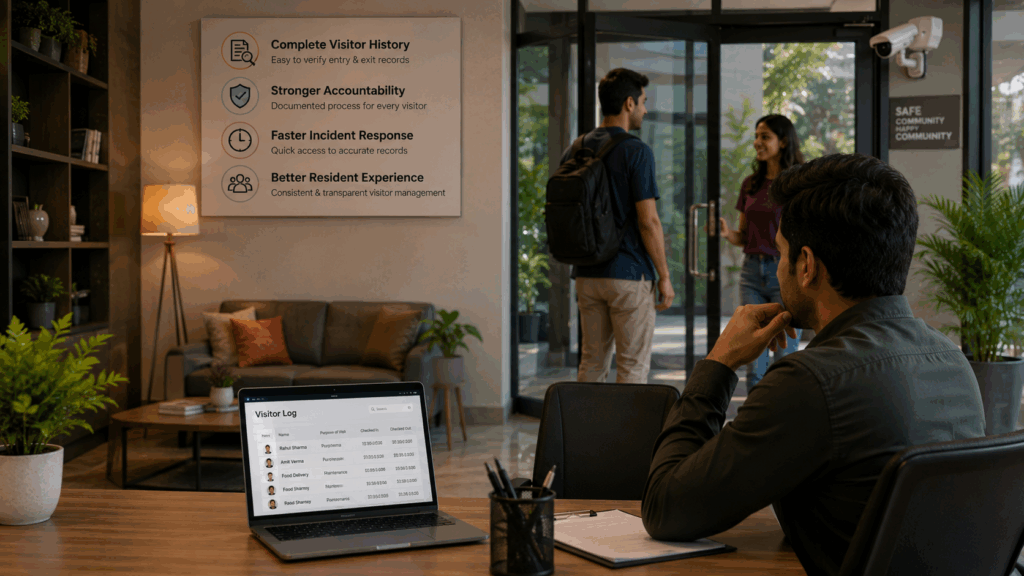
- Maintaining a complete and searchable visitor history, making it easier for management to verify entry and exit records whenever required instead of searching through pages of handwritten registers.
- Strengthening accountability across the property, since every visitor follows a documented approval process that reduces confusion about who entered the premises and why.
- Supporting quicker incident investigations, as management can immediately access visitor records instead of relying on memory or incomplete manual logs.
- Improving the resident experience, because tenants know that everyone entering the property is being monitored through a consistent process rather than informal approvals.
As rental businesses expand, these operational benefits become just as valuable as the security benefits.
The Limitations of Manual Visitor Registers
Handwritten visitor registers have been used in residential properties for decades. They are inexpensive, familiar, and require very little technology. However, their biggest weakness is that they depend entirely on manual effort and consistency.
A visitor may forget to sign the register. The security guard may skip recording an exit time during busy hours. Handwriting may be unclear, phone numbers may be incomplete, or pages may simply go missing over time. Individually, these seem like small issues. Collectively, they create significant gaps in the property’s security records.
Manual systems also become increasingly difficult to manage when visitor traffic grows.
Some common operational challenges include:
- Searching historical records takes considerable time, especially when management needs to verify visitor details from several days or weeks earlier. This delays decision-making during situations where quick information is important.
- Human errors become unavoidable, as visitor details are often recorded under time pressure, leading to incomplete names, incorrect phone numbers, or missing timestamps.
- Monitoring visitor movement becomes difficult, since handwritten registers provide little visibility into whether visitors have actually exited the property or are still inside.
- Multiple staff members may maintain records differently, creating inconsistencies that reduce the reliability of the entire visitor management process.
While these systems may still function for very small properties, they struggle to support the operational demands of larger PGs and co-living spaces.
What Is Digital Visitor Management?
Digital visitor management replaces manual registers with a structured, technology-driven system that records, verifies, and tracks visitor activity electronically.
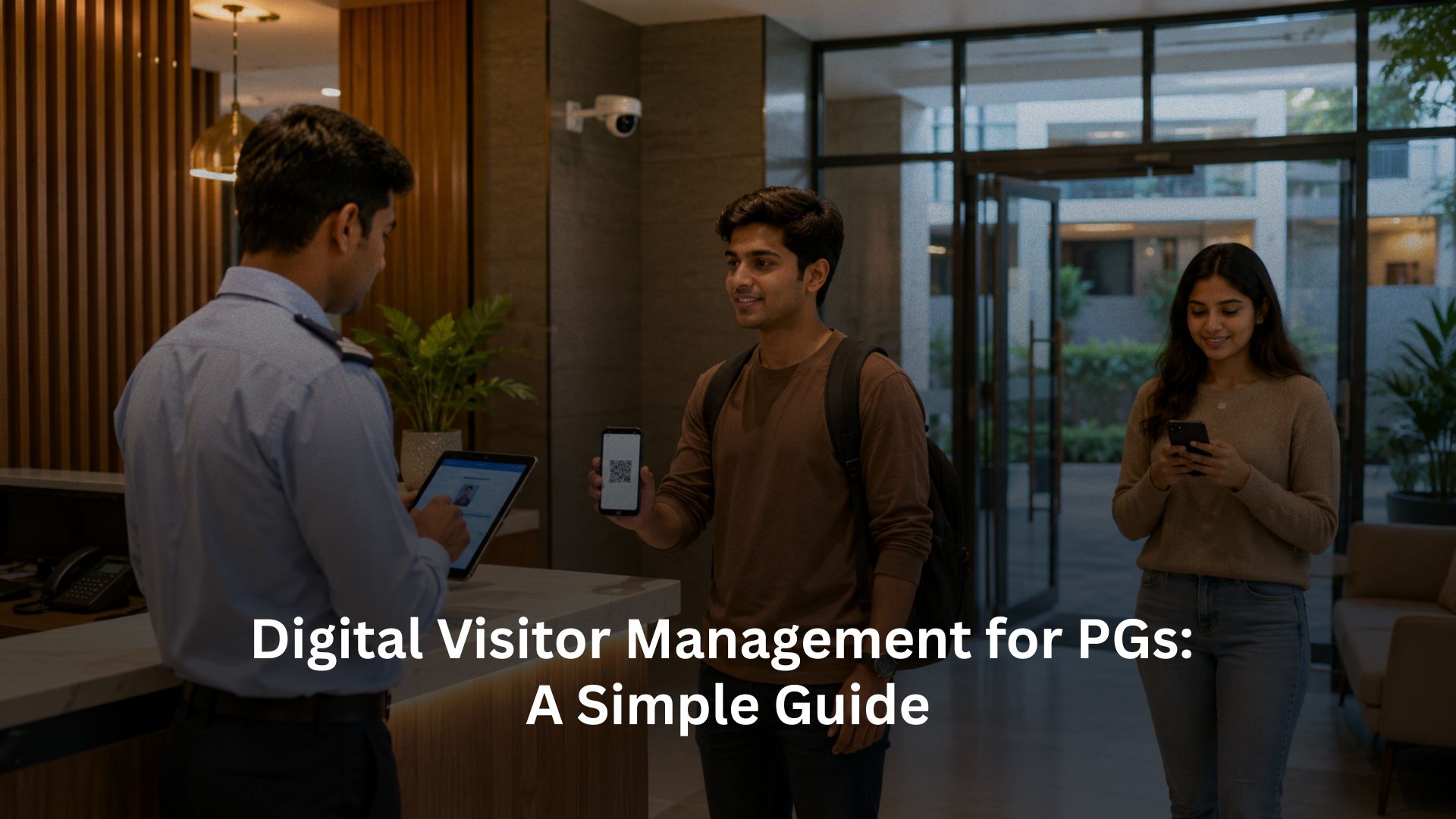
Instead of relying on paper logs, visitor information is stored digitally, allowing property managers to access records instantly whenever required. Depending on the property’s setup, visitors may be registered through a mobile application, a tablet at the reception desk, QR code check-ins, or digital approval requests sent directly to residents.
More importantly, digital systems create standardized workflows. Every visitor follows the same process, reducing dependency on individual staff members and improving consistency across the property.
A modern visitor management system generally includes:
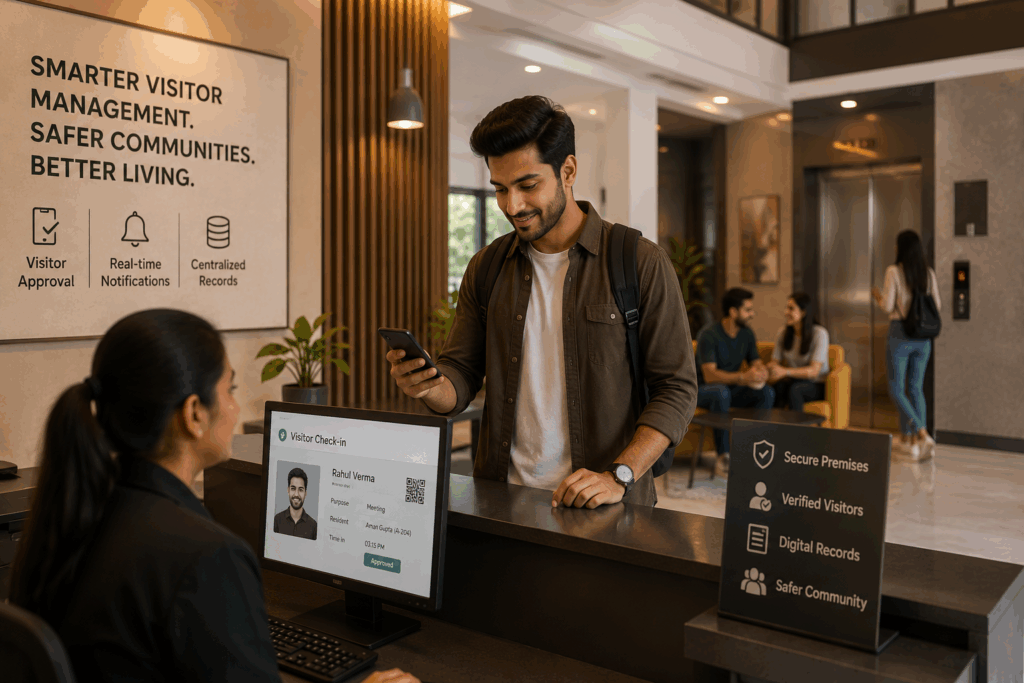
- Digital visitor registration, where details such as name, phone number, purpose of visit, and the resident being visited are captured electronically.
- Resident approval workflows, allowing tenants or property managers to approve visitors before they enter the premises, depending on the property’s security policy.
- Automated entry and exit records, ensuring that visitor timelines are accurately maintained without depending on handwritten notes.
- Centralized visitor history, making it easy to retrieve records whenever management needs them for operational or security purposes.
The objective is not simply to digitize a register but to build a process that is faster, more transparent, and easier to manage.
How Digital Visitor Management Improves Daily Property Operations
The biggest advantage of digital visitor management is not that it eliminates paper registers. It improves the way the entire property operates.
When visitor approvals, records, and notifications are managed through one system, property managers spend less time coordinating routine tasks and more time focusing on overall operations.
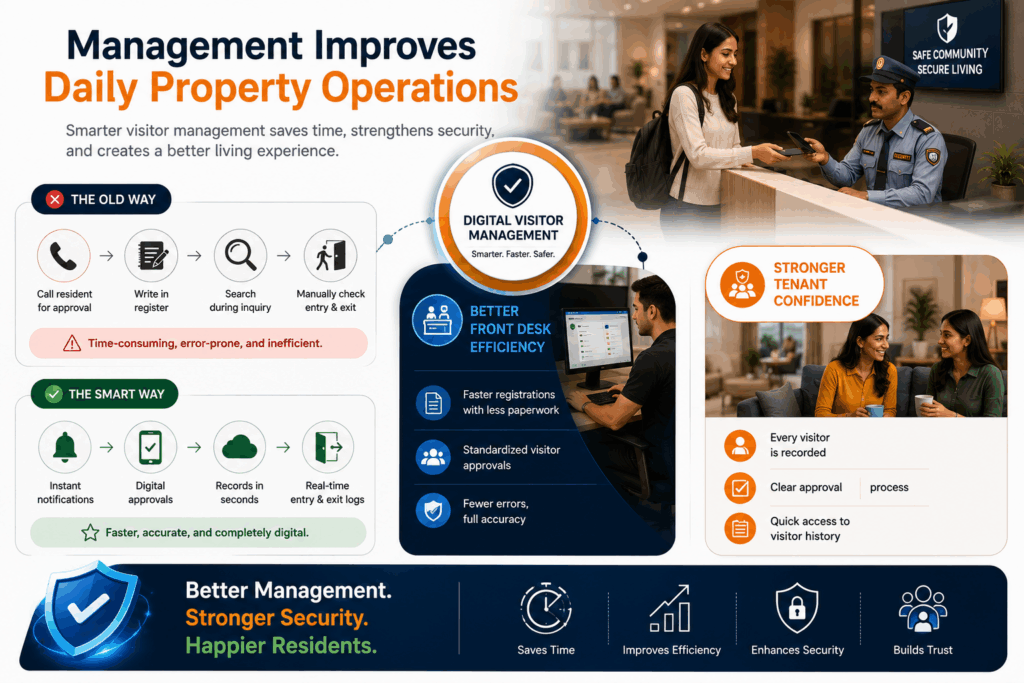
For example, instead of calling residents every time a visitor arrives, notifications can be sent instantly. Instead of searching through physical registers during an inquiry, visitor records can be retrieved within seconds. Instead of manually checking whether visitors have exited, management has access to updated entry and exit logs.
Over time, these improvements create measurable operational benefits.
Better Front Desk Efficiency
Reception and security staff handle hundreds of interactions every week. Manual documentation often slows down this process, particularly during peak hours.
Digital visitor systems simplify front-desk operations by:
- Reducing repetitive paperwork, allowing staff to register visitors more quickly while maintaining complete records.
- Standardizing visitor approvals, so every entry follows the same process regardless of which staff member is on duty.
- Minimizing administrative errors, because visitor information is entered digitally instead of being interpreted from handwritten notes.
Stronger Tenant Confidence
Security is one of the first factors prospective residents evaluate before choosing a PG or co-living space. A structured visitor management process sends a clear message that the property takes resident safety seriously.
Tenants are more likely to feel comfortable when they know:
- Every visitor is recorded before entering the property.
- Visitor access follows a defined approval process instead of informal verbal permissions.
- Management can quickly retrieve visitor information if any concern arises in the future.
This level of transparency helps strengthen trust between residents and property management, contributing to a better overall living experience.
Common Visitor Management Mistakes That Put PGs at Risk
Most visitor management issues aren’t caused by a lack of security, they stem from inconsistent processes. Visitors may enter without proper verification, records may be incomplete, or staff may follow different procedures. While these gaps seem minor, they can create serious challenges when verifying visitor history or responding to an incident.
As occupancy grows, informal systems become harder to manage. A process that works for a 20-bed PG often falls short in a 150-bed co-living property with multiple entry points and high visitor traffic.
Some of the most common mistakes include:
- Allowing visitors to enter without a standardized approval process, especially during peak hours or when the front desk is busy. While it may save a few minutes at the time, it creates inconsistencies that make visitor records unreliable.
- Depending entirely on handwritten registers, which are prone to missing information, illegible handwriting, incomplete timestamps, and misplaced records. This limits the property’s ability to retrieve accurate visitor history whenever required.
- Failing to record visitor exit times, making it difficult to determine whether a visitor has already left the property or is still inside the premises. This becomes particularly important during emergencies or security checks.
- Not informing residents when their visitors arrive, leading to unnecessary calls, delays, and confusion at the reception desk. A simple notification system can significantly improve both tenant experience and operational efficiency.
- Treating visitor management as an isolated security task, rather than integrating it into the property’s overall operational workflow. Visitor data can also support compliance, incident reporting, and operational planning when managed effectively.
Avoiding these mistakes isn’t about adding more rules, it’s about creating a system that is consistent, transparent, and easy for both staff and residents to follow.
Best Practices for Managing Visitors in a PG
A digital system alone doesn’t guarantee better visitor management. The most successful properties combine technology with clearly defined processes that every resident, staff member, and visitor understands.
The goal should be to make visitor entry secure without making the experience unnecessarily complicated.
Some best practices that experienced property operators follow include:
- Define clear visitor timings and policies so residents know when visitors are allowed and under what conditions. Clear policies reduce confusion while helping staff enforce rules consistently.
- Verify every visitor before entry, regardless of whether they are family members, friends, service providers, or delivery personnel. Consistency strengthens both security and accountability.
- Maintain accurate digital records that include visitor details, entry time, exit time, purpose of visit, and the resident being visited. This creates a reliable audit trail that can be accessed whenever required.
- Notify residents instantly when visitors arrive, allowing them to approve or coordinate visits without repeated phone calls from reception or security staff.
- Review visitor data periodically instead of treating it as information that is simply stored away. Patterns in visitor activity can help management improve staffing, strengthen security protocols, and identify operational bottlenecks.
When these practices become part of everyday operations, visitor management shifts from being a reactive security task to a structured operational process.
Manual vs Digital Visitor Management
As rental businesses become more technology-driven, the difference between manual and digital visitor management becomes increasingly noticeable. While both systems aim to record visitor information, their ability to support growing properties differs significantly.
| Manual Visitor Management | Digital Visitor Management |
|---|---|
| Relies on handwritten registers and manual record-keeping. | Stores visitor information digitally for quick retrieval and better accuracy. |
| Staff members manually verify visitor details, increasing the chances of human error. | Standardized digital workflows ensure every visitor follows the same approval process. |
| Retrieving historical visitor records can take several minutes or even hours. | Visitor history can be accessed instantly through searchable digital records. |
| Limited visibility into visitor movement and exit tracking. | Real-time entry and exit records improve operational visibility and accountability. |
| Difficult to scale as occupancy and visitor traffic increase. | Easily supports multiple properties, larger occupancies, and higher visitor volumes. |
For smaller properties with very few visitors, manual registers may appear sufficient. However, as occupancy increases, the administrative effort required to maintain these records grows rapidly. Digital visitor management provides a scalable solution that supports both operational efficiency and resident safety.
Why Digital Visitor Management Is Becoming the Industry Standard
The rental housing industry has undergone significant changes over the past few years. Tenants today expect greater transparency, faster communication, and stronger security than ever before. At the same time, property managers are expected to handle growing occupancies without proportionally increasing administrative effort.
Digital visitor management addresses both of these expectations.
Instead of relying on fragmented processes, it creates a connected workflow where visitor approvals, notifications, and records are managed through a single system. This reduces manual coordination while improving visibility across daily operations.
It also supports a more professional tenant experience. Residents appreciate knowing that visitor access is monitored consistently rather than depending on who happens to be managing the front desk that day. This consistency strengthens trust and contributes to a safer living environment.
As regulatory requirements and resident expectations continue to evolve, digital visitor management is no longer viewed as an optional upgrade. For many professionally managed PGs and co-living spaces, it has become an essential part of modern property operations.
How RentOk Helps Simplify Visitor Management
Managing visitor approvals, maintaining accurate records, and coordinating communication manually becomes increasingly challenging as occupancy grows. When visitor information is spread across paper registers, phone calls, and WhatsApp messages, maintaining consistency becomes difficult, especially for properties operating across multiple buildings or locations.
RentOk helps property managers streamline visitor management by bringing essential operational workflows together on a single platform. Instead of relying on disconnected processes, operators can manage visitor records alongside tenant management, occupancy tracking, payments, and day-to-day property operations.
With a centralized property management system, operators can improve:
- Visitor record management by maintaining organized digital records that are easy to retrieve whenever required.
- Operational visibility through structured workflows that reduce dependency on manual coordination and paperwork.
- Tenant communication by creating smoother approval processes and improving overall transparency between residents and property management.
- Scalability by supporting standardized visitor management practices across multiple properties without increasing administrative complexity.
By digitizing routine operational tasks, RentOk allows property managers to spend less time managing paperwork and more time delivering a secure and well-organized living experience for their residents.
Conclusion
Visitor management has evolved far beyond maintaining a register at the entrance. It now plays a critical role in property security, operational efficiency, and tenant satisfaction. As PGs and co-living spaces continue to scale, relying on manual processes makes it increasingly difficult to maintain accurate records, ensure consistent approvals, and respond quickly when information is needed.
Digital visitor management addresses these challenges by creating structured workflows that improve accountability, simplify front-desk operations, and provide greater visibility into daily property activities. More importantly, it helps build trust among residents by ensuring that every visitor is managed through a transparent and reliable process.
If you’re looking to modernize your property’s visitor management while streamlining overall operations, schedule a personalized demo with RentOk and discover how one centralized property management platform can help you improve security, simplify daily workflows, and deliver a better tenant experience.
About the Author
Ishika Pannu
Ishika Pannu brings you the latest insights and easy-to-apply strategies in property management—helping you simplify renting and grow with RentOk.