Property Management
PG Monsoon Maintenance Checklist: A Complete Guide

Written by
Ishika Pannu
Read Time
13 min read
Posted on
July 3, 2026
Overview
Overview
PG Monsoon Maintenance Checklist: A Complete Guide
The monsoon season brings much-needed relief from the summer heat, but for PG owners, hostel operators, and co-living businesses, it also marks the beginning of one of the most demanding periods of the year. Heavy rainfall, increased humidity, waterlogging, and fluctuating power supply can quickly turn minor maintenance issues into operational challenges that affect tenant satisfaction, property condition, and even occupancy rates.
Many maintenance problems associated with the monsoon don’t develop overnight. A small roof crack can lead to water seepage within a few weeks. A blocked drain can cause flooding around entrances. Poor ventilation can result in damp walls and mould, making rooms uncomfortable for residents. These issues not only increase repair costs but also generate a surge in tenant complaints that demand immediate attention.
The difference between a well-managed property and one constantly dealing with maintenance emergencies often comes down to preparation. A structured PG maintenance checklist for the monsoon helps property owners identify potential risks before they escalate, ensuring smoother operations throughout the season.
In this guide, we’ll walk through the most important maintenance checks every PG owner should complete before and during the monsoon to protect the property, reduce avoidable repairs, and provide a better living experience for tenants.
Why Monsoon Maintenance Should Be a Priority for Every PG Owner
Property maintenance is often viewed as a routine operational task, but during the monsoon, it becomes a critical business function. Delaying inspections or waiting for tenants to report issues usually leads to higher repair costs and unnecessary operational disruptions.
Consider what happens when maintenance is reactive rather than preventive. Water begins leaking into a tenant’s room, electrical fittings become unsafe due to moisture, and complaints start arriving from multiple residents at once. Staff are forced to respond to emergencies instead of following planned maintenance schedules, while tenants begin questioning the property’s reliability.
A proactive approach helps prevent these situations before they affect daily operations.
Regular monsoon maintenance can help you:
- Protect the property’s infrastructure by identifying leaks, cracks, and drainage issues before continuous rainfall causes structural damage.
- Reduce maintenance costs since preventive repairs are often far less expensive than emergency restoration work after significant damage has occurred.
- Improve tenant satisfaction by providing residents with a safe, clean, and comfortable living environment throughout the rainy season.
- Minimize operational disruptions by addressing potential issues before they generate multiple complaints and require urgent coordination.
- Preserve your property’s reputation, as well-maintained facilities often translate into better tenant reviews, referrals, and long-term occupancy.
Rather than treating maintenance as a seasonal expense, successful PG operators see it as an investment that protects both the property and the tenant experience.
The Most Common Monsoon Problems in PGs
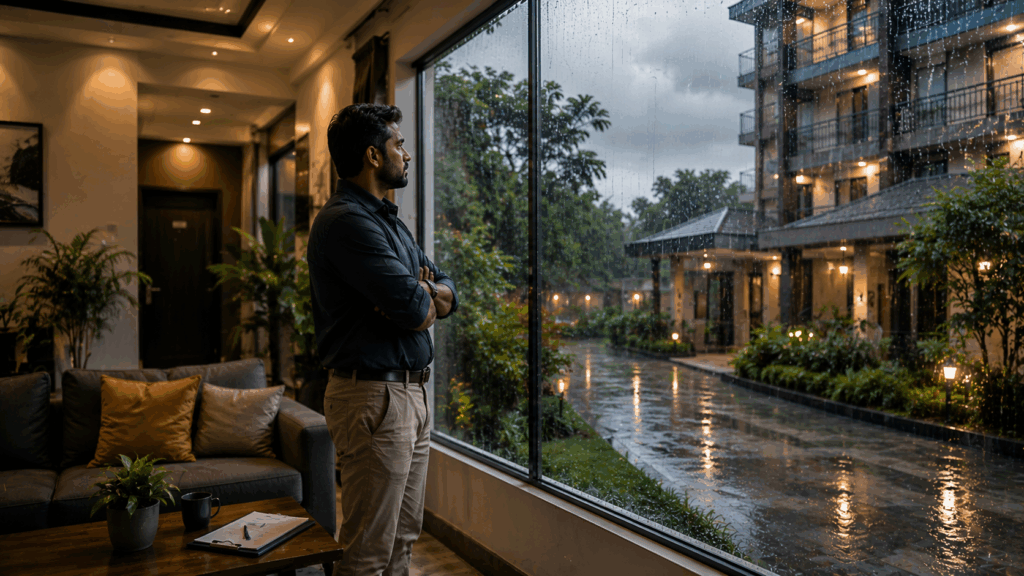
Every property experiences the monsoon differently, but certain maintenance issues appear consistently across PGs, hostels, and co-living spaces. Understanding these common challenges makes it easier to prioritize inspections and allocate maintenance resources effectively.
Water Leakage and Damp Walls
Water seepage remains one of the most frequent complaints during the rainy season. Small cracks in roofs, terraces, exterior walls, or window frames allow rainwater to enter gradually, damaging paint, furniture, electrical fittings, and sometimes even tenants’ personal belongings.
Over time, persistent moisture also encourages mould growth, creating unpleasant living conditions and potential health concerns.
Drainage and Waterlogging
Blocked drains are another recurring issue. Leaves, dirt, and debris often accumulate in drainage systems before the rains begin. Once heavy showers arrive, water cannot flow freely, leading to waterlogging around entrances, parking areas, staircases, and common spaces.
Apart from damaging property, stagnant water also increases mosquito breeding, creating additional hygiene concerns.
Electrical Safety Risks
Moisture and electrical systems are never a good combination. Loose wiring, exposed connections, damaged switchboards, or water entering electrical panels can create serious safety hazards for both tenants and staff.
Electrical inspections should therefore become a priority before the monsoon reaches its peak.
Increased Tenant Complaints
Even well-maintained properties generally experience an increase in maintenance requests during the rainy season.
The most common complaints usually relate to:
- Damp rooms or leaking ceilings that make living spaces uncomfortable during continuous rainfall.
- Plumbing issues caused by overflowing drains or increased pressure on existing pipelines.
- Poor ventilation that creates humidity, unpleasant odours, and slower drying of clothes.
- Mosquito infestations resulting from stagnant water in nearby areas or poorly maintained surroundings.
Understanding these recurring issues allows property managers to prepare proactively instead of responding only after complaints begin to accumulate.
Monsoon Maintenance Checklist for PG Owners
Preparing a property for the rainy season doesn’t require expensive renovations. In most cases, consistent inspections and timely preventive maintenance are enough to avoid larger operational problems later.
1. Inspect the Roof Before the Rain Does
The roof is your property’s first line of defence against heavy rainfall. Unfortunately, it is also one of the most neglected areas until leaks begin appearing inside tenant rooms.
A thorough roof inspection before the monsoon helps identify weak spots that may not be visible during dry weather. Small cracks, damaged waterproofing, or loose tiles can all allow rainwater to seep through over time.
When inspecting your roof, pay close attention to:
- Visible cracks or damaged waterproofing layers, as these often become the primary source of water leakage during prolonged rainfall.
- Loose tiles, broken concrete sections, or deteriorating roofing material that may allow rainwater to penetrate the structure.
- Areas where water tends to accumulate, since standing water increases pressure on the roof surface and accelerates structural wear.
- Drainage outlets on terraces, ensuring they remain free of debris so rainwater can flow away efficiently.
Addressing these issues before continuous rainfall begins is considerably easier and more cost-effective than repairing interior water damage later.
2. Clean Every Drain Before It Becomes a Problem
One blocked drain has the potential to affect an entire property during heavy rainfall. Overflowing water can damage pathways, create slippery surfaces, flood common areas, and even enter ground-floor rooms.
Many drainage issues are entirely preventable through routine cleaning before the season starts.
Your maintenance team should inspect:
- Rainwater pipes and rooftop outlets to remove accumulated leaves, plastic waste, and other debris that restrict water flow.
- Surface drains around entrances and parking areas, preventing waterlogging that affects both accessibility and cleanliness.
- Underground drainage channels, ensuring there are no blockages that could cause water to back up during intense rainfall.
- Nearby surroundings outside the property, since municipal drains clogged with waste can also contribute to flooding around your building.
Clean drainage systems not only protect the property but also reduce mosquito breeding and improve overall hygiene throughout the premises.
3. Check Windows, Doors, and Exterior Walls
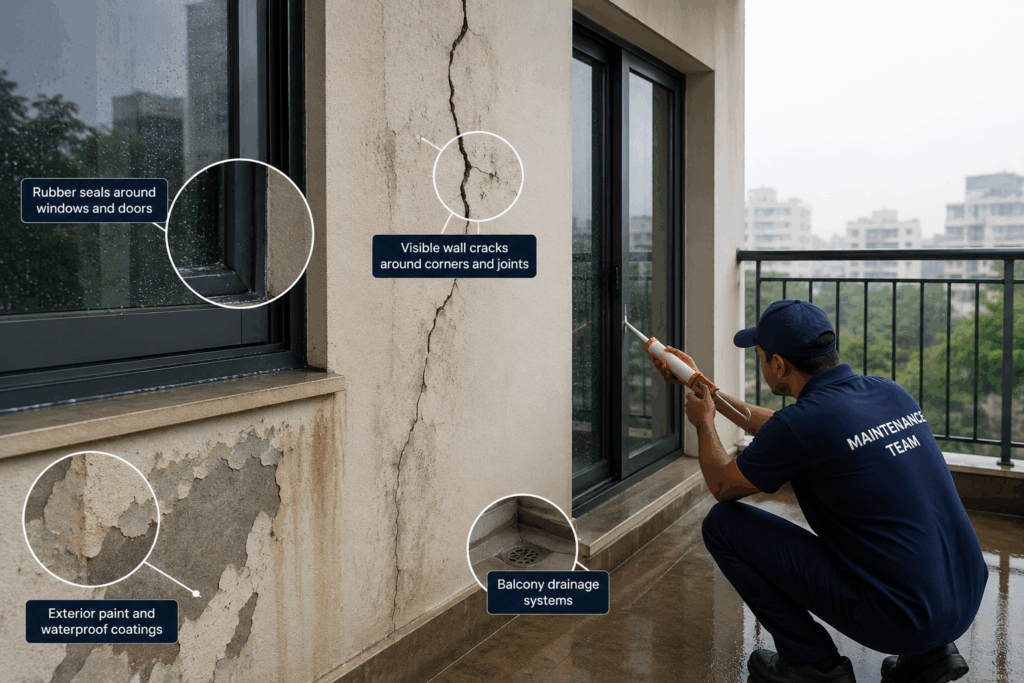
Even a well-constructed building can develop small gaps over time due to regular wear and seasonal temperature changes. During the monsoon, these gaps become easy entry points for rainwater.
Window frames, balcony doors, exterior walls, and ventilation openings should all be inspected carefully before heavy rainfall begins.
Focus on areas such as:
- Rubber seals around windows and doors, replacing worn-out seals that no longer prevent water from entering.
- Visible wall cracks, especially around corners and joints where seepage commonly begins.
- Balcony drainage systems, ensuring water doesn’t accumulate near room entrances.
- Exterior paint and waterproof coatings, particularly on older buildings where weather exposure has reduced their effectiveness.
Simple sealing and waterproofing work completed before the season often prevents much larger repairs later.
4. Ensure Electrical Systems Are Safe and Rain-Ready
Monsoon conditions significantly increase the risk of electrical faults. Moisture can seep into exposed wiring, switchboards, and electrical panels, creating safety hazards for both tenants and staff. What may seem like a minor wiring issue during summer can become a serious concern once heavy rains begin.
Instead of waiting for power failures or tenant complaints, schedule a preventive electrical inspection before the peak monsoon months. This not only improves safety but also reduces unexpected maintenance expenses caused by damaged electrical components.
Your inspection should include:
- Checking switchboards, sockets, and exposed wiring for signs of moisture, rust, or loose connections that may become hazardous during continuous rainfall.
- Testing backup power systems, including generators and inverters, to ensure they function properly during power outages that are common in many cities during the monsoon.
- Inspecting outdoor lighting and electrical fixtures, as these remain directly exposed to rain and often require additional waterproof protection.
- Verifying earthing and circuit protection systems, ensuring the property is equipped to handle electrical fluctuations safely.
Electrical maintenance may not always be visible to tenants, but it directly impacts their safety and confidence in the property.
5. Don’t Ignore Plumbing and Water Supply Systems
Heavy rainfall places additional pressure on plumbing infrastructure. Overflowing drains, fluctuating water pressure, and unnoticed leaks often become more frequent during this period.
A small plumbing issue can quickly escalate into water damage, damp walls, or repeated tenant complaints if left unattended.
Before the season progresses, inspect your property’s complete plumbing network, paying close attention to bathrooms, kitchens, overhead tanks, and underground pipelines.
A thorough inspection should cover:
- Leaking taps, shower fittings, and pipelines, preventing unnecessary water wastage and moisture accumulation inside rooms.
- Water storage tanks, ensuring they are cleaned, covered, and free from contamination caused by rainwater or debris.
- Drain traps and bathroom outlets, as these frequently collect hair, soap residue, and dirt that slow down drainage during the rainy season.
- External pipelines and exposed plumbing, checking for visible damage that could worsen under prolonged rainfall.
Preventive plumbing maintenance not only avoids costly repairs but also contributes to a cleaner and healthier living environment.
6. Keep Common Areas Clean, Dry, and Safe
During the monsoon, common areas often receive the highest footfall while also being the most exposed to rainwater. Slippery staircases, wet corridors, and poorly maintained entrances increase the chances of accidents while creating a negative first impression for both existing and prospective tenants.
Cleanliness during this season goes beyond appearance, it becomes an important aspect of safety and operational efficiency.
Property managers should pay special attention to:
- Staircases, corridors, and entrance areas, ensuring they remain dry and are cleaned regularly to reduce the risk of slips and falls.
- Parking spaces and outdoor pathways, removing standing water that may damage surfaces or encourage mosquito breeding.
- Housekeeping schedules, increasing the frequency of cleaning during periods of continuous rainfall to maintain hygiene standards.
- Waste disposal areas, preventing overflowing bins and ensuring garbage is cleared regularly despite weather-related disruptions.
Well-maintained common spaces reassure tenants that the property is being managed proactively, even during challenging weather conditions.
7. Improve Ventilation to Prevent Dampness and Mould
One of the most overlooked consequences of the monsoon is increased indoor humidity. Rooms that receive limited sunlight or poor airflow often develop damp walls, musty odours, and mould growth within a short period.
Apart from affecting the property’s condition, mould can also impact indoor air quality and tenant health.
Improving ventilation doesn’t always require expensive renovations. Small operational changes can make a significant difference.
Consider the following:
- Inspect exhaust fans and ventilation systems, ensuring they are functioning efficiently in kitchens, bathrooms, and common areas.
- Encourage periodic room ventilation, especially during breaks in rainfall, to improve air circulation and reduce indoor moisture.
- Check furniture placement, ensuring wardrobes and beds are not positioned tightly against damp walls where moisture tends to accumulate.
- Monitor rooms with recurring dampness, addressing the root cause instead of repeatedly repainting affected areas.
A dry, well-ventilated room creates a noticeably better living experience during the rainy season.
8. Prepare for a Rise in Maintenance Requests
Even with the best preventive planning, the monsoon usually brings an increase in maintenance requests. The difference lies in how efficiently those complaints are managed.
Without a structured process, maintenance issues often get reported through multiple channels, WhatsApp messages, phone calls, verbal conversations with staff, or handwritten notes. This fragmented approach makes it easy for requests to be overlooked, delayed, or duplicated.
Instead, property managers should establish a clear workflow where every complaint is logged, assigned, tracked, and resolved systematically.
An effective complaint management process should help you:
- Record every maintenance request in one place, reducing the chances of issues being forgotten or lost between different communication channels.
- Assign responsibilities clearly, ensuring maintenance staff know exactly which tasks require immediate attention.
- Track complaint status transparently, allowing both management and tenants to stay informed throughout the resolution process.
- Identify recurring maintenance issues, helping owners make long-term improvements rather than repeatedly addressing the same problems.
A structured maintenance workflow becomes particularly valuable when multiple complaints arrive simultaneously during periods of heavy rainfall.
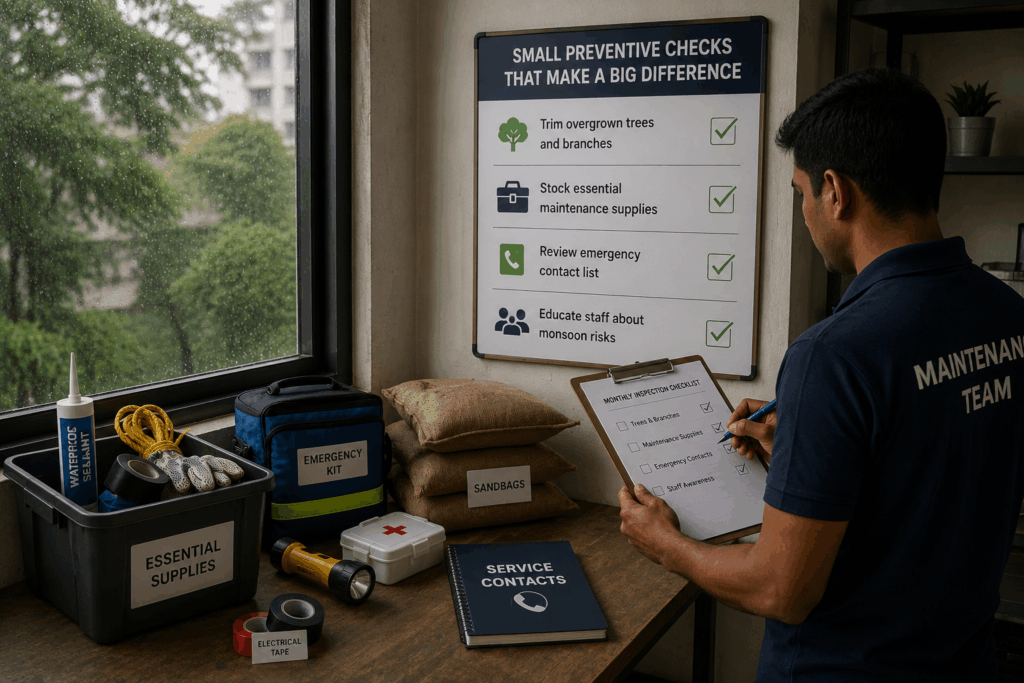
Small Preventive Checks That Make a Big Difference
Large-scale repairs often begin with small maintenance tasks that were overlooked. Setting aside a few hours each month for routine inspections can prevent weeks of operational disruption later.
Some additional preventive checks include:
- Trimming overgrown trees and branches that could damage windows, roofs, or electrical lines during strong winds.
- Stocking essential maintenance supplies, such as waterproof sealants, sandbags, electrical tape, and emergency lighting before they’re urgently needed.
- Reviewing emergency contact lists for electricians, plumbers, waterproofing contractors, and local service providers to ensure quick assistance when required.
- Educating housekeeping and maintenance staff about common monsoon risks so potential issues are identified during their daily routines instead of after tenant complaints.
Preventive maintenance isn’t about eliminating every possible issue, it’s about reducing avoidable disruptions and responding faster when unexpected situations arise.
How RentOk Helps Simplify Monsoon Maintenance
Managing maintenance during the monsoon becomes increasingly challenging as occupancy grows. When complaints start arriving from multiple tenants, relying on WhatsApp chats, phone calls, or handwritten registers often leads to delayed responses and missed follow-ups.
RentOk’s Complaint Management feature helps property managers centralize the entire maintenance process within a single platform. Instead of juggling multiple communication channels, every maintenance request can be logged, assigned, tracked, and monitored until resolution.
This enables operators to:
- Track every complaint from submission to completion without losing visibility.
- Assign maintenance tasks to the appropriate team members and monitor progress in real time.
- Reduce duplicate complaints by keeping tenants informed about the status of ongoing requests.
- Maintain a complete history of recurring maintenance issues, helping identify long-term infrastructure improvements.
- Improve response times while ensuring seasonal maintenance requests are handled in an organized and transparent manner.
Whether it’s a leaking ceiling, blocked drainage line, plumbing issue, or electrical fault, having a structured complaint management system allows property managers to stay in control instead of reacting under pressure.
Conclusion
Monsoon maintenance is not just about protecting a building from rain, it’s about protecting your operations, your tenants’ experience, and your property’s long-term value. A proactive approach allows you to address small issues before they become expensive repairs, maintain safer living conditions, and reduce the volume of emergency maintenance requests throughout the season.
By following a structured maintenance checklist and responding to issues systematically, PG owners can navigate the rainy season with greater confidence while ensuring uninterrupted operations.
Looking for a smarter way to manage maintenance requests? Explore RentOk’s Complaint Management feature to streamline issue tracking, improve response times, and keep your property running smoothly throughout the monsoon season.
About the Author
Ishika Pannu
Ishika Pannu brings you the latest insights and easy-to-apply strategies in property management—helping you simplify renting and grow with RentOk.