Legal
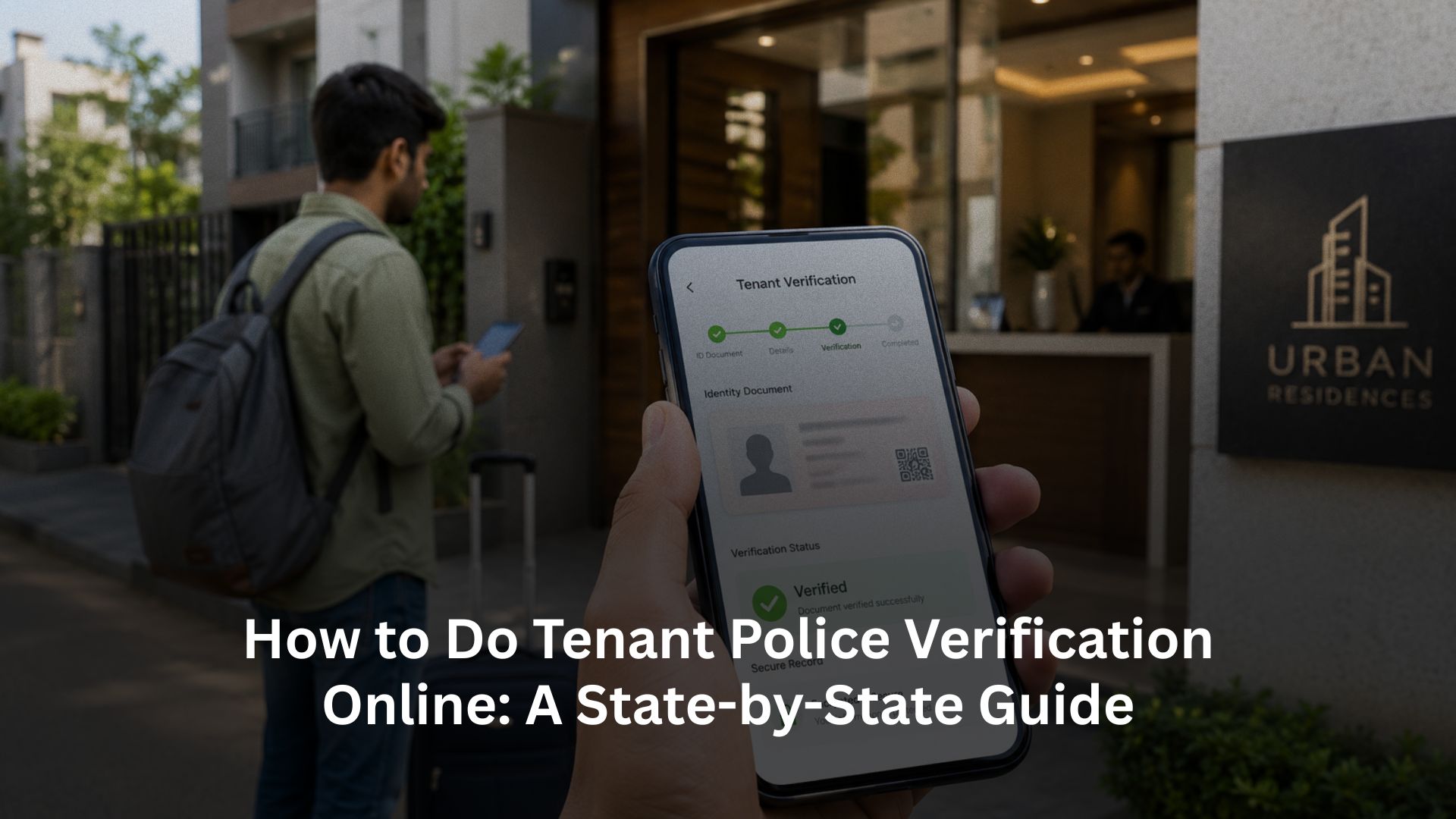
How to Do Tenant Police Verification Online: A State-by-State Guide

Written by
Ishika Pannu
Read Time
15 min read
Posted on
August 21, 2026
Overview
Overview
How to Do Tenant Police Verification Online: A State-by-State Guide
A tenant moves into your PG, hostel, or rental property, the agreement is signed, the deposit is collected, and the room is handed over. For many landlords, that is where onboarding effectively ends. But from a property management and compliance perspective, there is one more question that should never be overlooked: has the tenant been properly verified?
Tenant police verification is an important part of responsible rental management in India, particularly for landlords and operators managing multiple residents. It creates a formal record of who is occupying a property and helps establish greater accountability between the property owner, tenant, and local authorities.
However, there is one important detail that often gets missed: tenant verification does not follow one identical process across India. Different states, cities, and police jurisdictions may have different requirements, forms, portals, and submission methods. Some have introduced online services, while others may still require information to be submitted through the local police station or an approved government service.
For a landlord managing one property, keeping track of these differences may seem manageable. For a PG or co-living operator handling dozens or hundreds of move-ins, it quickly becomes a documentation problem.
That is why tenant verification needs to be treated as part of the tenant onboarding workflow, rather than as a separate task that someone remembers to complete later.
Why Tenant Police Verification Matters for Property Owners
Tenant verification is often viewed as a legal formality. In practice, it serves a much broader operational purpose.
When a tenant moves into a property, the landlord is not simply handing over a room. They are creating a residential relationship that may continue for several months or even years. Maintaining accurate information about who is living at the property gives the owner a reliable record that can become important during disputes, inspections, emergencies, or requests from authorities.
Delhi Police, for example, states in its Citizen Charter that house owners are required to inform the local police whenever they keep a tenant. It also provides tenant registration and verification services through its official website.
A structured verification process can help maintain:
- Accurate tenant identification, ensuring that the person occupying the property is properly associated with the identity and contact information provided during onboarding.
- Traceable occupancy records, making it easier for property managers to know who is staying in which property or room and from what date.
- Better documentation readiness, so important tenant information is available when it is required instead of being scattered across paper files, phones, and messaging applications.
- A more professional onboarding process, where verification becomes a standard part of moving in rather than an afterthought.
The bigger point is that verification should not be treated as something you do only because an authority may ask for it. For professionally managed rental businesses, it is part of building a reliable tenant record from day one.
If you are looking at the larger picture of tenant documentation, Aadhaar-Based Digital KYC: A Step-by-Step Guide for PG Owners is a useful next read because KYC and police verification serve different purposes during tenant onboarding.

Is Tenant Police Verification Mandatory Everywhere in India?
This is where landlords need to be careful.
It would be incorrect to assume that every city in India follows the same tenant verification requirements or uses the same online form. The applicable process can vary depending on the state, city, police commissionerate, and local rules.
Tenant verification is also only one part of the legal framework around renting. For a broader understanding of rental documentation, read What Happens If You Don’t Register Your PG Rental Agreement?, which covers another important area of rental compliance.
For example, Delhi Police provides a dedicated tenant registration service and states that house owners should inform the local police when they keep tenants.
Mumbai follows a different process. Mumbai Police provides an online tenant-information form for properties within the Brihanmumbai Police Commissionerate. Importantly, the official portal clarifies that a police NOC is not required to rent a flat or house. Tenant information can instead be submitted online, directly to the concerned police station, or through registered post.
Telangana provides another example. Its published MeeSeva procedure includes tenant verification as a citizen service and sets out the required documentation and verification process.
The takeaway is simple: landlords should avoid generic advice such as “just fill out the police verification form.” The correct process depends on the property’s location.
Before onboarding a tenant, identify the official police or government procedure applicable to that specific property and make it a defined step in your tenant onboarding workflow. This helps landlords stay aligned with local requirements without assuming that a process used in one city automatically applies everywhere in India.
How to Apply for Tenant Police Verification Online
While the exact process varies by location, the overall workflow is usually similar.
The first step is preparing the tenant’s information before starting the verification process. Collect the tenant’s identity, address, contact, and rental details through a standardized onboarding process.
This helps avoid incomplete submissions, delays, and repeated document requests. Rent Agreement Renewal: When and How to Update Terms also explains why keeping tenant documentation updated is important throughout the rental lifecycle.
Once the information is ready, the general process looks like this.
1. Find the Official Police or Government Portal
Start with the official website of the relevant state police department, city police commissionerate, or government citizen-service platform.
Do not rely on an old blog post, a random form shared on WhatsApp, or an unofficial website simply because it appears in a search result. Online government services can change, and the portal applicable to one city may not apply to another.
2. Enter the Tenant and Property Details
The verification form generally requires basic information about the tenant, property owner, and rental property.
Depending on the jurisdiction, this may include the tenant’s name, mobile number, current and permanent address, occupation, employer or educational institution, and property details.
For example, Mumbai’s official tenant-information form collects details about the property owner, rented property, tenant, workplace, and identity documents.
Keeping these details organized during onboarding also makes them easier to use later for rent tracking, agreements, and occupancy records. See What Is Rental Management? Tools to Manage Your Property Efficiently.
3. Upload or Submit the Required Documents
The documents required vary by location, but identity and address documentation form the foundation of most verification processes.
Before submitting anything, make sure the information across the tenant’s documents is consistent. A mismatch in names, addresses, or other details can create unnecessary delays or require clarification.
4. Submit and Preserve the Record
After completing the applicable process, retain the acknowledgement, application details, or other confirmation provided by the authority.
This is particularly important for professional property operators. Verification should not end with clicking “submit.” The property’s internal records should also reflect that the process was initiated or completed.
That distinction becomes increasingly important when multiple tenants are being onboarded at the same time.
Tenant Police Verification in Delhi
Delhi is one of the cities with a clearly established police framework for tenant verification.
Delhi Police provides a Domestic Help/Tenant Registration service, and its Citizen Charter states that house owners should inform the local police when keeping a tenant.
For landlords, the practical approach is to collect complete tenant information and follow the current Delhi Police procedure applicable to the property.
If you manage multiple rental units, verification should be a standard part of every move-in. A consistent process ensures that the same information is collected for every tenant and reduces missed steps as your rental operations grow.
For properties with 100+ tenants, maintaining this consistency can become difficult with spreadsheets. The Easiest Way to Manage 100+ Tenants Without Using Excel explores how larger rental operations can manage tenant records more efficiently.
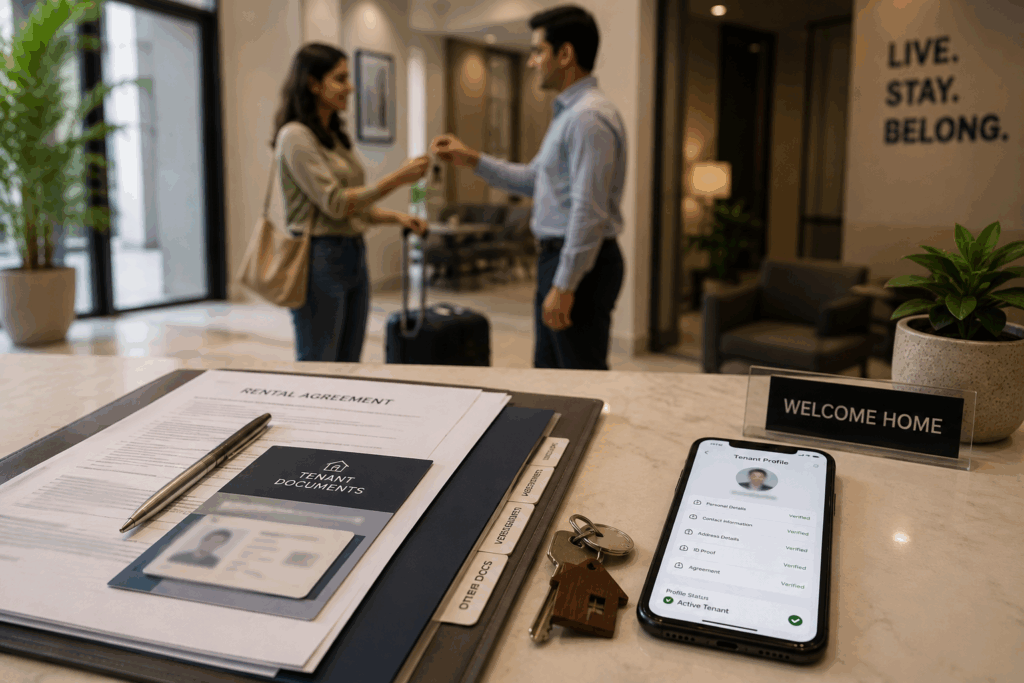
A standardized checklist can make a significant difference by ensuring that the same categories of information are collected for every resident.
Tenant Police Verification in Mumbai
Mumbai provides a particularly useful example of why state-wise and city-wise verification guidance matters.
The Mumbai Police website provides an online Tenant Information facility for properties within the Brihanmumbai Police Commissionerate. The information can also be submitted directly to the concerned police station or by registered post.
The official portal also clarifies that a police NOC is not required for renting a flat or house. This is an important distinction because tenant information submission and obtaining a police NOC are not the same thing.
The online form collects several categories of information, including:
- Property-owner details, which establish who is responsible for the rented premises.
- Property information, allowing the tenant record to be associated with the correct rented address.
- Tenant identification and address details, which form the core of the verification information.
- Employment and workplace information, where applicable, helping create a more complete tenant profile.
- Identity-proof documentation and related information, which supports the tenant’s submitted identity details.
The takeaway for landlords is simple: follow the process prescribed by the local police authority rather than assuming that a process used in another city applies automatically.
What About Tenant Verification in Hyderabad?
Hyderabad follows a different route again.
Hyderabad Police lists Tenant Verification among its MeeSeva services, while Telangana’s published procedure provides information about the documents and process associated with the service.
The published procedure identifies documents such as a citizen petition, address proof, and identity proof. It also outlines police verification through the relevant process and gives a stated service period for the listed service.
For PG and hostel operators, this highlights an important operational principle: compliance processes should be mapped to the location of each property.
If a business operates in Delhi, Mumbai, Hyderabad, and Bangalore, it should not maintain one generic “tenant verification” process and assume it works everywhere. Instead, the internal workflow should identify the relevant jurisdiction and the documentation required there.
What Documents Are Required for Tenant Verification?
There is no universal document list that applies identically to every city. However, most tenant verification processes require information that establishes the tenant’s identity, address, and connection with the rented property.
Depending on the local authority, landlords may need information such as:
- Government-issued identity proof, such as Aadhaar, passport, driving licence, voter ID, or another accepted document.
- Current and permanent address details, particularly where the tenant’s current rental address differs from their permanent residence.
- Recent photograph and contact information, allowing the tenant record to be clearly associated with the individual occupying the property.
- Rental or property information, including details that connect the tenant to the specific premises.
- Employment, educational, or workplace information, where the relevant verification process asks for it.
- Landlord or property-owner information, which may be required as part of the submission.
The exact requirements should always be checked against the official portal or police authority applicable to the property.
This is also where digital KYC becomes valuable. Collecting documents is only the first step; maintaining them in a structured and retrievable manner is what makes the information useful later.
RentOk has also covered the broader issue in How to Maintain Tenant KYC Records Digitally, including why scattered tenant documents become increasingly difficult to manage as occupancy grows.
What Happens If You Skip Tenant Verification?
The consequences of skipping or delaying tenant verification are not identical across India because the applicable requirements differ by jurisdiction. That is precisely why landlords should not assume that a relaxed process in one city means the same approach is acceptable somewhere else.
There is also an operational risk that exists regardless of the exact local requirement.
Imagine managing a property with 150 occupied beds. Tenants move in throughout the month, some move out, some extend their stays, and others change rooms. If verification information is being maintained manually, it becomes difficult to know whether every current resident has completed the required process.
That creates gaps such as:
- Incomplete tenant records, where important information is missing or stored separately from the main tenant profile.
- Delayed documentation, where verification is started weeks after move-in because there was no process to track it.
- Difficulty retrieving records, particularly when documents are spread across physical folders, personal devices, emails, and WhatsApp conversations.
- Compliance uncertainty, because management cannot immediately establish which tenants have completed the applicable verification process.
The real risk, therefore, is not simply forgetting one form. It is losing visibility over the compliance status of an entire property.
Why Manual Verification Becomes Difficult at Scale
Manual verification rarely fails because the process itself is impossible. It fails because rental businesses grow faster than their documentation systems.
A landlord with five tenants can probably remember who has submitted an ID, which agreement is pending, and which tenant still needs to complete verification. Once that number becomes 50, 100, or 500, memory is no longer an operational system.
This is where structured tenant onboarding becomes important.
A professional process should make it easy to answer questions such as:
Has the tenant submitted all required information? Has their documentation been recorded? Which property and room are they occupying? Has the verification process been initiated? Is there any information still pending?
When these answers are available without searching through multiple platforms, verification becomes a repeatable workflow rather than an administrative burden.
For a broader look at this process, How to Onboard a New Tenant in Under 10 Minutes explores how verification, documentation, payments, room assignment, and move-in coordination can be brought together into a standardized onboarding process.
What Should a Professional Tenant Verification Workflow Look Like?
The best approach is to treat tenant verification as a process, not just a form.
The workflow should start before move-in and continue until all required information is collected, verified, submitted through the correct channel, and properly recorded.
For larger PGs and co-living businesses, responsibilities should also be clearly assigned. Property Management Apps to Replace Manual Registers explores how digital systems can simplify these recurring tasks.
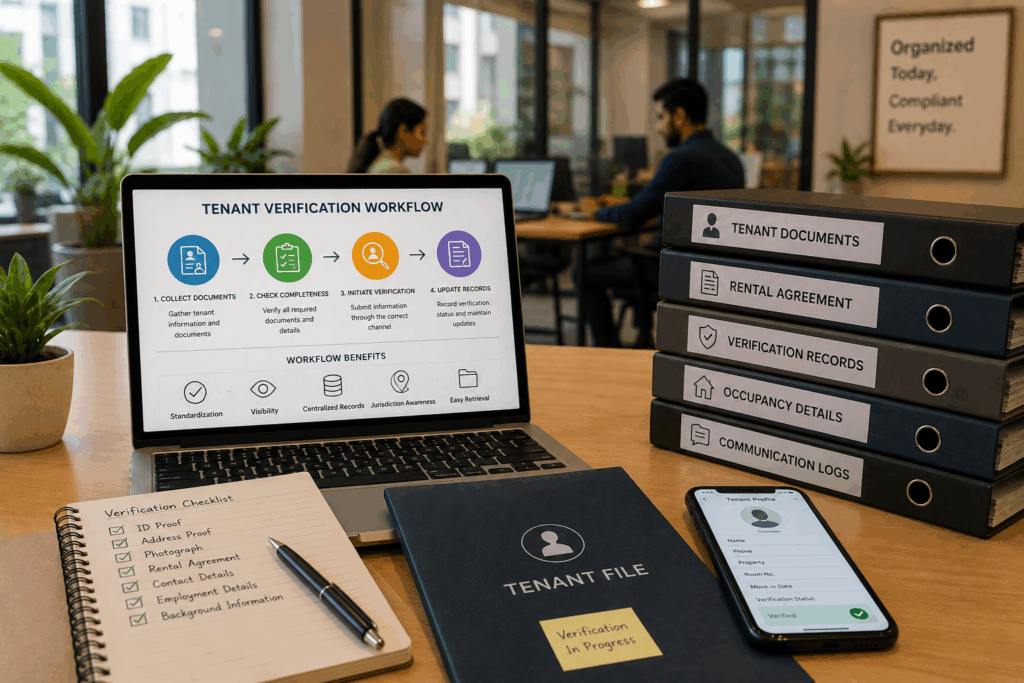
A clear workflow should define who collects documents, checks completeness, initiates verification, and updates the records after submission.
A strong process should therefore provide:
- Standardization, so every tenant goes through the same core onboarding and documentation workflow, even when different staff members handle move-ins.
- Visibility, so management can quickly identify pending documentation or verification instead of discovering gaps later.
- Centralized records, so tenant information remains connected to the relevant property, room, agreement, and occupancy record.
- Jurisdiction awareness, so the team knows that verification requirements may differ between Delhi, Mumbai, Hyderabad, Bangalore, and other locations.
- Easy retrieval, so important tenant information can be accessed quickly when management or an authorized authority requires it.
This approach turns compliance from a reactive task into part of everyday property operations.
How RentOk Helps You Manage Tenant Verification
For a growing PG, hostel, or co-living business, tenant verification rarely exists in isolation. It sits alongside KYC, agreements, tenant details, check-in information, room allocation, payments, and ongoing property management.
RentOk helps property operators bring these tenant-related workflows into a more structured digital system. Instead of relying entirely on spreadsheets, physical files, and scattered conversations, operators can maintain tenant information and property records in one connected platform.
This becomes particularly valuable as the number of tenants and properties increases. A centralized approach makes it easier for teams to maintain accurate tenant profiles, keep documentation organized, and reduce the administrative gaps that appear when onboarding is handled manually.
RentOk’s existing digital verification workflow also focuses on reducing the repetitive work associated with tenant onboarding, including digital KYC and agreement processes. Its earlier tenant-verification guidance explains how tenant information can be collected once and used to support the wider verification workflow.
The objective is not to replace the official requirements of a local police authority. It is to make the property-side management of tenant information more organized, traceable, and scalable.
Conclusion
Tenant police verification in India cannot be reduced to one universal form or one online process. Delhi, Mumbai, Hyderabad, Bangalore, and other cities can have different procedures, which means landlords need to verify the requirements applicable to the specific location of their property.
But there is one principle that remains consistent: tenant verification works best when it is built into the onboarding process from the beginning.
Collect the right information. Keep the documentation organized. Follow the applicable local procedure. Track what has been completed. And most importantly, do not let verification become something you try to reconstruct weeks after a tenant has already moved in.
For small landlords, this creates better documentation discipline. For PGs, hostels, and co-living operators managing hundreds of residents, it becomes an important part of running a scalable and professionally managed rental business.
Verify Tenants Digitally with RentOk and bring tenant verification, KYC, documentation, and property management into a more organized digital workflow.
Frequently Asked Questions
Find answers to common questions about this topic
About the Author
Ishika Pannu
Ishika Pannu brings you the latest insights and easy-to-apply strategies in property management—helping you simplify renting and grow with RentOk.